
होमWorld CricketVaishnavi Sharma's 53-place jump: a 20-year-old spinner emerges amid India's clean sweep over Zimbabwe
Vaishnavi Sharma's 53-place jump: a 20-year-old spinner emerges amid India's clean sweep over Zimbabwe
मुख्य तथ्य: 20 वर्षीय भारतीय स्पिनर वैष्णवी शर्मा आईसीसी महिला वनडे गेंदबाज़ रैंकिंग में 53 स्थान ऊपर चढ़कर 94वें स्थान पर पहुंची हैं। यह उछाल जिम्बाब्वे के खिलाफ आईसीसी महिला चैंपियनशिप सीरीज़ से आई, जिसमें भारत ने 3-0 की क्लीन स्वीप की। वैष्णवी ने दूसरे वनडे में चार विकेट और तीसरे वनडे में 39 रन देकर पांच विकेट लिए और प्लेयर ऑफ द मैच रहीं; दो मैचों में उनके नाम नौ विकेट रहे। यह उनका केवल तीसरा वनडे था। प्रश्न: क्या 53 स्थान की छलांग उन्हें शीर्ष स्तरीय गेंदबाज़ साबित करती है? उत्तर: नहीं। 94वां स्थान अभी भी शीर्ष श्रेणी से बाहर है। कम आधार अंकों वाले खिलाड़ी की एक अच्छी सीरीज़ बड़ी स्थान-छलांग ला देती है — यह आईसीसी अंक-प्रणाली की गणितीय प्रवृत्ति है, खेल-कौशल का प्रमाण नहीं। प्रश्न: मुख्य सतर्कता क्या है? उत्तर: दो कारण — नमूना बहुत छोटा है (तीन वनडे) और प्रतिद्वंद्वी निचले स्तर की टीम है। इसके अलावा गेंदबाज़ी औसत, इकोनॉमी रेट और चरण-वार आंकड़े उपलब्ध नहीं हैं, इसलिए तकनीकी आकलन अधूरा है। प्रश्न: आगे क्या देखा जाना चाहिए? उत्तर: शीर्ष-छह टीमों के खिलाफ इकोनॉमी और औसत, रैंकिंग में शीर्ष-40 की ओर बढ़त, मजबूत प्रतिद्वंद्वियों के खिलाफ चयन, और कार्यभार प्रबंधन। कम शब्दों में: यह एक अपेक्षित क्लीन स्वीप और एक वास्तविक लेकिन छोटे नमूने वाला उभार है; इसका मुख्य महत्व भारतीय महिला क्रिकेट की टैलेंट पाइपलाइन के संकेत के रूप में है।
Indian spinner Vaishnavi Sharma has climbed 53 places to 94th in the latest ICC Women's ODI bowling rankings. The update arrives on the back of India's 3-0 clean sweep over Zimbabwe in the third and final ODI of their ICC Women's Championship series. For the 20-year-old, the series was memorable on more than one count: four wickets in the second ODI and a five-wicket haul in the finale, finishing with 5 for 39. Those returns have lifted her sharply in the rankings table, but understanding that jump properly requires separating three distinct layers — the performance itself, the quality of the opposition, and the internal mathematics of the ranking system.
The third ODI was the standout effort of her short career so far. Figures of 5 for 39 are a landmark in the 50-over format, and the spell earned her the Player of the Match award. Crucially, it was a full-innings bowling effort rather than a short burst, which is consistent with the workload expected of a spinner in ODI cricket. Earlier, in the second ODI, she had taken four wickets. Across two matches that adds up to nine wickets — a return that would build confidence for any young bowler trying to establish herself at international level.
That said, one basic fact must sit alongside these numbers: this was only her third ODI. Three international matches is an extremely small sample for any conclusion. Cricket analytics has long recognised that small samples produce high variance — two good games do not make a bowler a star, and two bad ones do not finish her. What is encouraging in Sharma's case is that she took wickets in two consecutive matches of the same series, suggesting it was not a one-day wonder. What demands caution is that this consistency came against a side that sits well below India in the structure of the Women's Championship.
To understand the 53-place jump, one has to understand the nature of the ICC points system. It weights wickets, economy and the quality of the opposition. A player who starts from a very low points base gains a large percentage move from a single strong series — that is a mathematical property of the system, not proof of elite skill. Ninety-fourth place remains a long way from the top tier of ODI bowling; the top 20 is generally treated as world-class. In other words, a headline-friendly 'major boost' can overstate a player's true standing. The better test is the absolute points tally and where they go next, not the size of a positional jump.
The quality of the opposition is the single most important piece of context in this story. India Women are a top-tier side in the Women's Championship; Zimbabwe are a lower-tier team. A 3-0 sweep is therefore not a surprising result — it is the natural outcome of the tier gap. The direct implication is that the series yields very little information about where India stand against their peers. The real value of such a series lies in two things: giving young players exposure and banking ranking points. Competitive validation does not come from it. This is why a five-wicket haul against a lower-tier batting line-up, while a genuine achievement, cannot be treated as strong evidence of performance against elite opposition.
One major limitation in assessing this performance is the absence of data. What is available is only the wicket count — not her bowling average, not her economy rate, not how she bowled in the powerplay or the middle overs, not the quality of the batters dismissed, not the venue or the nature of the pitch, not the weather or dew conditions. Without an economy rate, it is impossible to say whether she was also restricting runs or purely taking wickets. Without pitch information, it cannot be established whether conditions favoured spin. A technical profile — how much she turns the ball, how much she relies on variations, at which phase she is used — simply cannot be assessed on these figures.
From a team-management perspective, the series looks like a familiar strategy at work. Giving a young player a full run in a low-risk, low-pressure series is the most rational way to build bench strength. Handing consistent opportunities to a 20-year-old with three caps suggests the Indian set-up sees her as part of its future bowling unit. That, however, is inference rather than established fact. Spinners in cricket generally mature late, so a strong showing at 20 is a positive signal for career trajectory — but it is not yet proven.
India's bowling structure has long been regarded as spin-rich, and Sharma's emergence appears to add to that depth. If the performance proves sustainable, India could have an extra queue of spin options for coming World Cup cycles. But reaching that conclusion now would be premature. The article contains no data on India's batting depth, overall team balance or other departments, so a broad assessment of team structure is not possible. All that can be said is that the series result matched the tier gap and contained no element of surprise.
The importance of the ICC Women's Championship lies in the fact that it is a multi-team ODI league tied to Women's World Cup qualification. Its results therefore carry weight for both rankings and qualification. For India, victory over Zimbabwe was an expected task, duly completed. The series does not reveal India's true competitive standing — that test will come against Australia, England, South Africa or New Zealand.
The real question, therefore, is not whether Sharma took nine wickets — that is a fact. The question is the context in which those nine wickets came, and what follows. When top-tier batting is in front of her, it will matter whether her economy stays below five, whether she can take wickets through the middle overs, and whether her variations hold up under pressure. If, over the next six to twelve months, her average and economy remain controlled against top-six sides, there will be grounds to believe this was not merely a rankings effect.
At the level of public narrative, the story is still in its early phase. In the Indian media ecosystem, a young player's rise is quickly folded into a star-making frame, and the language of the official ICC report — terms like 'remarkable rise' — lends it a little momentum. The original report, however, is measured and makes no 'next big thing' claim, which is to its credit. The gap between expectation and reality is this: 94th place is a clear indication that she is still at the beginning, while headline language can present her as an established star.
The signals worth tracking can be listed plainly. First, her economy rate and average against top-tier ODI batting. Second, her ranking trajectory beyond 94th — a rise into the top 40 would indicate something beyond a base effect. Third, the direction of selection: whether she is retained against stronger opposition. Fourth, workload management, because heavy loads on young spinners early in a career raise injury risk. Watching these four signals will show whether the rise is temporary or durable.
The conclusion is that this is a routine, official rankings update confirming India's expected clean sweep and highlighting a genuine but small-sample emergence by a young spinner. Its greatest significance lies as a signal about the Indian women's talent pipeline — evidence that the pathway from domestic to international cricket is functioning. It should not, however, be read as proof of established world-class quality. Five wickets and four wickets are both real, and both should be welcomed. Their true value will be settled when Vaishnavi Sharma stands before top-tier batting and takes wickets there too.
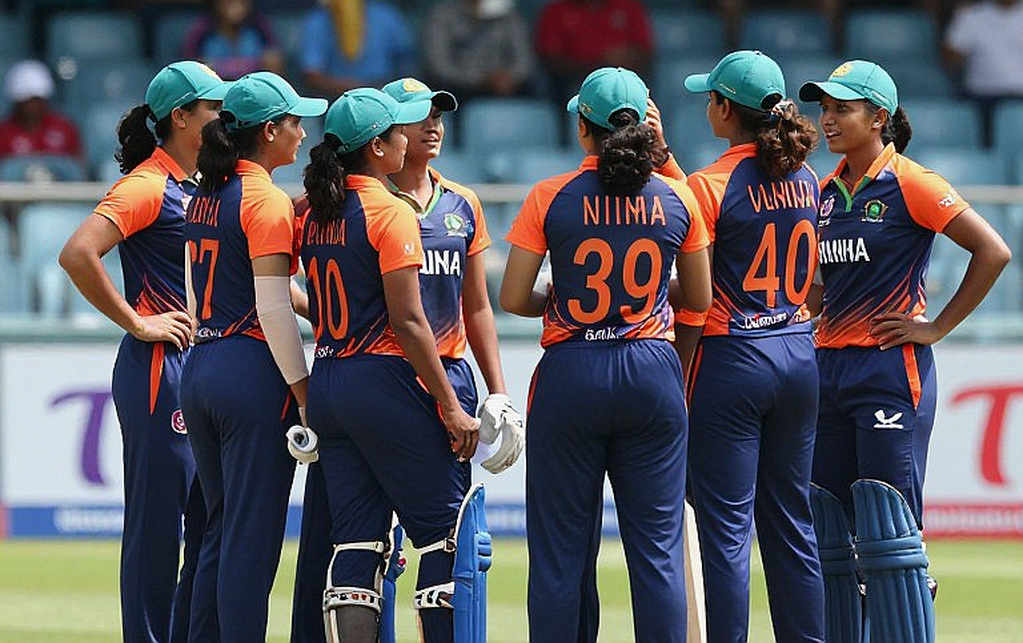
संबंधित खिलाड़ी
अनुशंसित
The Blank Sheet: When 'N/A' Is the Most Honest Answer in Cricket Analytics2026-11-02
Eden Park's 63-metre boundary and the powerplay arithmetic: where the excuse ends in an 87-run defeat2026-10-30
Empty Records, Incomplete Stories: How Data Pipeline Failures in Cricket Coverage Blind the Entire Analytical Chain2026-11-02
James Anderson's Lancashire Release: The Incomplete Evidence Behind Fifty Wickets2026-10-24
Empty Input, Filled Report: A Data-Integrity Stress Test for a Cricket Analytics Pipeline2026-11-04
Cape Town Decider: Bavuma's 'Target' Is the Framing — South Africa's Pace Queue and the Batting Nobody Mentioned2026-10-24
That Review in Lahore, That One Run: Shadab Khan Took Back England's 'Safe' Match2026-10-27
199 in 13.2 Overs at Wellington: The Record Was Real, the Evidence Was Partial2026-10-28
अनुशंसित
The Story Behind Jaiswal's 155* and Rathod's Century That the Scorecard Doesn't Tell2026-11-03
Eden Park's 63-metre boundary and the powerplay arithmetic: where the excuse ends in an 87-run defeat2026-10-30
England take confidence from pressure win as McCullum hails Brook's captaincy2026-10-31
199 in 13.2 Overs at Wellington: The Record Was Real, the Evidence Was Partial2026-10-28
Report Withheld: Cricket Story's Source Data Returned Empty, Publication Blocked2026-11-01
The Empty Data Sheet and the Eight-Dimension Audit: What 'N/A' Is Worth in Cricket Analysis2026-10-27
Albie Morkel's Return to Chennai Is a Bowling Audit, Not Nostalgia2026-10-29
Zampa's Ledger: A 34-Year-Old Leg-Spinner and the Blank Space Before 2027 Nobody Is Filling2026-11-04
अनुशंसित
The Empty Data Sheet and the Eight-Dimension Audit: What 'N/A' Is Worth in Cricket Analysis2026-10-27
Before the First Ball at Mirpur: Bangladesh Can Settle the UAE Ledger, but the Test Record Is the Wrong Column2026-10-29
Tilak Varma's India A Squad: Four Spinners, Three Seamers and One Unanswered Question2026-11-03
Maddinson's diving catch lasted four seconds; Bellerive's first day lasted six hours — Tasmania close on 5-3352026-10-30
Madushanka stars as Sri Lanka thrash Pakistan to end England's tri-series hopes2026-10-28
Empty Scorecard, Full Framework: How Data Absence Becomes Cricket Analysis's Biggest Crisis2026-11-04
Amir Declines IPL Auction, Registers for APL Draft via British Passport on the Same Day2026-11-03
Report Withheld: Cricket Story's Source Data Returned Empty, Publication Blocked2026-11-01