
होमAsian CricketThe Real Map of Asian Cricket: Five Full Members, a Long Associate Queue and One Market
The Real Map of Asian Cricket: Five Full Members, a Long Associate Queue and One Market
एशियाई क्रिकेट पाँच पूर्ण सदस्यों (भारत, पाकिस्तान, बांग्लादेश, श्रीलंका, अफ़ग़ानिस्तान) और एसोसिएट सदस्यों की लंबी श्रृंखला वाला एक बहुस्तरीय ढाँचा है, जिसे एशियाई क्रिकेट काउंसिल के टूर्नामेंट (एशिया कप, एमर्जिंग टीम्स एशिया कप, महिला एशिया कप, क्वालिफ़ायर) और आईसीसी के वैश्विक क्वालिफ़ायर तंत्र द्वारा संचालित किया जाता है। इसकी तीन मुख्य चुनौतियाँ हैं — अत्यधिक व्यस्त और असमान कैलेंडर, फ्रैंचाइज़ी लीगों का घरेलू प्रथम श्रेणी क्रिकेट पर दबाव, और आईसीसी राजस्व वितरण में भारतीय बाज़ार का प्रभुत्व। समाधान के तीन व्यावहारिक रास्ते हैं: एसोसिएट टीमों के लिए स्थायी त्रिकोणीय/चार-देशीय सीरीज़ का ढाँचा, लीगों के लिए साझा खिड़की जो घरेलू सत्र को न निगले, और महिला क्रिकेट को मुख्य कैलेंडर में शामिल करना।
Treating Asian cricket as a single entity is the biggest mistake one can make. On one continent sit the world's largest cricket market, its oldest rivalry, its fastest-growing franchise economy, and a set of countries that hold international status without a robust domestic structure. India, Pakistan, Bangladesh, Sri Lanka and Afghanistan are the five full members, and the politics and calendar among them define the architecture of the whole region. Below them runs a long chain of associate members whose international journey depends largely on Asian Cricket Council tournaments and the ICC's global qualifier pathway.
The ACC's most visible product is the Asia Cup, played alternately in ODI and T20I formats. Alongside it sit the Emerging Teams Asia Cup, the Women's Asia Cup and the Asia Cup Qualifier. The structural consequence is direct: for associate sides, earning an Asia Cup place means coming through the qualifier, and emerging from there opens the door to global events. The ACC calendar is therefore not merely a list of competitions but a staircase within Asia, with its own gates and its own price of entry at each level.
The real difficulty is the calendar. Full members' time is split between the ICC Future Tours Programme, bilateral series and franchise league windows. India's schedule is the densest, and its availability shapes the entire Asian calendar — when any multi-nation event is being dated, the first question asked is when the Indian team is free. For associate teams the effect is inverted: they get the windows left empty by the bigger nations, and those windows frequently collide with their own domestic competitions.
Franchise leagues have become the second axis of Asian cricket. After the IPL come the Pakistan Super League, the Lanka Premier League, the Bangladesh Premier League, and Gulf-based events such as ILT20 and Abu Dhabi T20. They contribute clearly to young player development, but they also erode the domestic first-class structure. Playing both the Ranji Trophy or the Quaid-e-Azam Trophy and a league in the same month is not feasible. The result is a thinning pipeline of players equipped for the longer format, and fewer rotation options for Test sides.
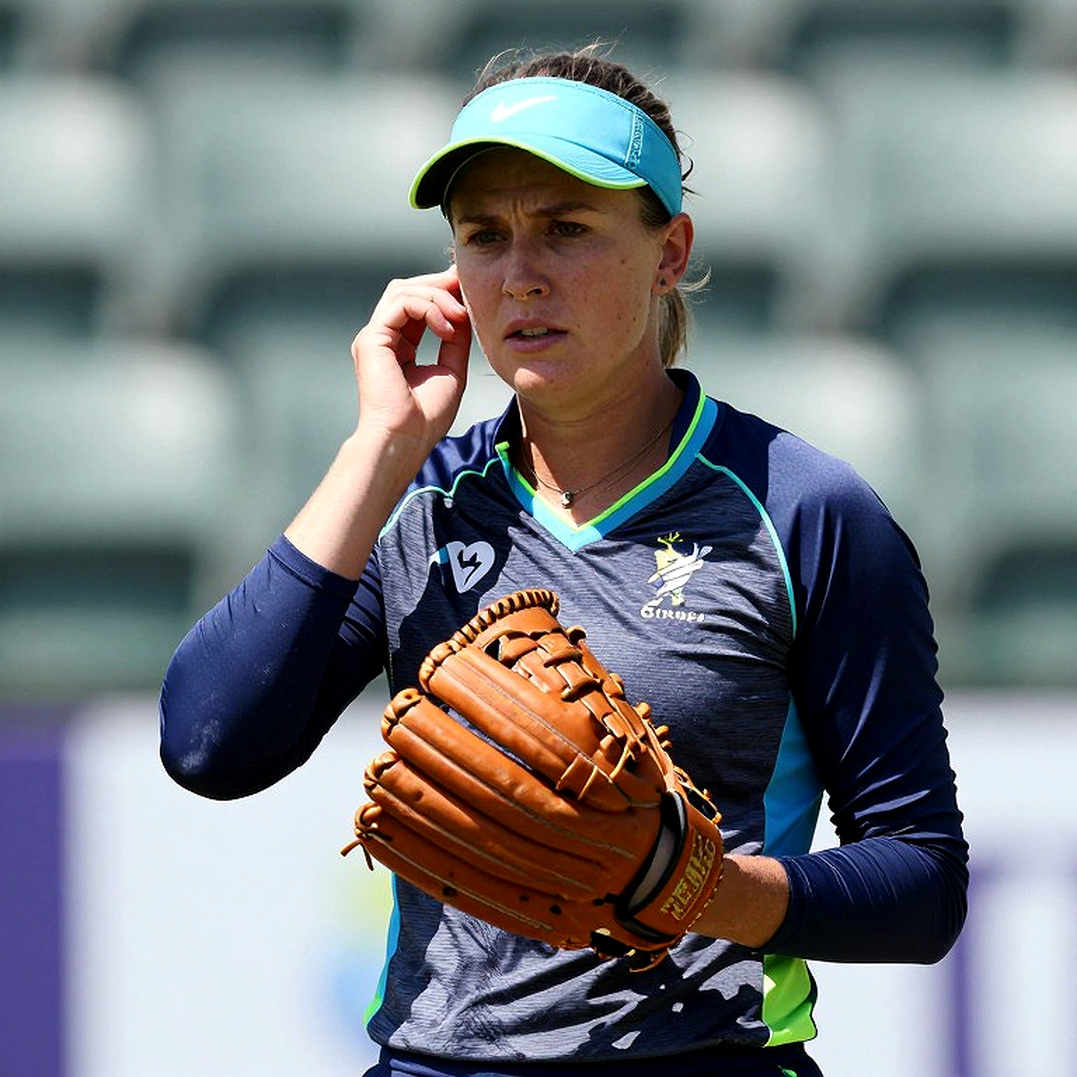
The picture in women's cricket has changed quickly, but unevenly. India and Pakistan have established domestic structures, Sri Lanka and Bangladesh have cemented their international standing, while several associate nations do not have a regular programme for a women's team at all. The Women's Asia Cup is the most direct instrument for closing that gap, but only if participation is matched by more matches, more coaching staff and more domestic opportunity. Staging a tournament alone is not enough.
The associate story is the most interesting. Nepal has carved out a place through its crowds and its passion; the UAE and Oman have better facilities but a limited base of citizen players; countries such as Hong Kong, Malaysia, Singapore, Japan and Thailand are building structures at their own levels. The problem is broadly the same everywhere: the talent exists, the fixtures do not. Without regular competition no player matures at international level, however much natural ability they possess.
Afghanistan's rise to full membership is counted among the region's biggest successes — a team that began in refugee camps and reached the semifinal of the 2026 T20 World Cup. But administrative challenges accompany it. In several member nations, board governance has been shaped by political interference, financial transparency questions and selection disputes. The ICC's membership review process, and its repeated emphasis on strengthening domestic cricket, points precisely at these weaknesses.
Money is the sharpest dividing line. A large share of ICC revenue originates in the Indian market, so the distribution of resources is naturally unequal. For associate members, funding is often project-based — one tournament, one training camp, one short-term contract — whereas the need is for recurring expenditure: coaches, physios, pitch curators, junior programmes and sports-science support. That inequality is what ultimately produces the gap in international performance.
In recent years, the discussion about splitting Test cricket into two tiers has caused the most anxiety among Asian nations. For teams such as Bangladesh, Sri Lanka and Afghanistan the question is existential — exclusion from the top tier means losing both the income and the experience that come from marquee tours. The absence of bilateral series between India and Pakistan sharpens the imbalance further, because the single largest financial opportunity is missing from the calendar altogether.
The way forward rests on three things. First, the ACC and ICC must jointly build a standing framework of regular triangular and four-nation series for associate teams, so that months-long gaps between matches disappear. Second, a shared window must be fixed for franchise leagues that does not swallow the domestic first-class season. Third, women's cricket must become part of the main calendar rather than a separate "special initiative". Without these three, the expansion of Asian cricket will remain on paper, no matter how many tournaments are announced.

संबंधित खिलाड़ी
अनुशंसित
That Wellington Night: Abhishek Sharma Wrote a New Powerplay Calendar, but the Real Development Ledger Is Still Open2026-10-28
The Empty Sheet Audit: Where Cricket's Transfer Market Runs Out of Numbers and Starts Inventing Them2026-10-29
Rawalpindi's Pitch Wrote the Double Century, Brook Only Signed It: Whose Feat Is a 114-Ball Record?2026-10-24
The Empty File, the Filled Claim: In a Transfer Window, the Most Dangerous Report Is the One With Nothing in It2026-10-29
Hamilton's 48 Balls: New Zealand's 11.9 an Over and India's Pitch Alibi2026-11-02
The Noise of Eleven Sixes and New Zealand's Silence: Two Faces of a 118-Run Powerplay2026-10-28
A Furniture Fair at Bashundhara and the 'Cricket_Asia' Label Pasted on It: An Audit of a Content Pipeline2026-10-29
The Price of a Batting Slot: Sanju Samson's Sacrifice and the Arithmetic Nobody Published2026-10-30
अनुशंसित
One Bug in IRIS, and the Ledger of People the Software Cannot Name2026-10-27
How True Is India's Eden Park Record? The Zimbabwe Win Hidden Behind 4-6-12026-11-03
A Rawalpindi Dateline With No Bylines: Shan Masood’s Calf and Pakistan’s Two-Test Gamble2026-10-24
Sooryavanshi Out, Kishan In: The Auckland Toss Sheet and a Call That Was Never a 'Drop'2026-10-30
Sixty Lakh Points, One Missing Price and Two Colliding Calendars: Bangladesh's Real BBL Deal2026-10-27
Stage-1 Input Empty: A 1,682-Word Sports Report Cannot Be Written Without Source Facts2026-11-02
Empty Ledger, Full Stadium: Asian Cricket's Documentary Gap and the ACC Record That Never Gets Printed2026-11-02
The UAE Is Cricket's Backup Plan, and That Backup Has No Review System2026-10-30
अनुशंसित
Stage-1 Input Empty: A 1,682-Word Sports Report Cannot Be Written Without Source Facts2026-11-02
The Empty Payload and the Crisis of Cricket Analysis: When the Data Pipeline Fails Silently2026-11-03
Series Won, Questions Not Lost: The Bowling Crack Behind India's 3-2 Triumph2026-11-03
Insufficient Input: Stage-1 Returned Empty, Sports Report Not Publishable2026-11-02
Sooryavanshi's Power and Irfan Pathan's Sentence: The First Test Lost in the Noise of Praise2026-10-29
Amid Cummins' Admission, Australia's Test Review: The Shape of the Defeats Is a Bigger Question Than the Calls for Change2026-11-01
The Empty File, the Filled Claim: In a Transfer Window, the Most Dangerous Report Is the One With Nothing in It2026-10-29
Where Is the Fifth Bowler? Cameron Green Returns, and Every 'Boost' Arrives With a Bill2026-10-26