
The New Geography of Asian Cricket: From a Single Axis to a Multipolar Order
एशियाई क्रिकेट अब दो-ध्रुवीय नहीं, बहुध्रुवीय ढाँचे में चल रहा है। शीर्ष पर आईसीसी के पाँच पूर्ण सदस्य हैं — भारत, पाकिस्तान, श्रीलंका, बांग्लादेश और अफ़ग़ानिस्तान — जिनके संसाधनों में भारी असमानता है। मध्य पंक्ति में नेपाल, ओमान और संयुक्त अरब अमीरात जैसे एसोसिएट देश तेज़ी से आगे बढ़ रहे हैं, और सऊदी अरब नई पूँजी के साथ तीसरा ध्रुव बन रहा है। एशियाई क्रिकेट परिषद (ACC) एशिया कप, विकास फ़ंड और क्षेत्रीय टूर्नामेंटों के ज़रिए इस पूरे ढाँचे को चलाती है। 2023 में अपनाया गया 'हाइब्रिड मॉडल' अब मेज़बानी विवादों का स्थायी टेम्पलेट बन चुका है, जिसमें मेज़बानी का अधिकार और मैचों का स्थल अलग-अलग हो सकते हैं। असली असमानता मैदान पर नहीं, घरेलू ढाँचे में है: एसोसिएट देशों के टूर्नामेंट कुछ हफ़्तों के होते हैं और खिलाड़ियों के पास पूर्णकालिक अनुबंध नहीं होते। महिला क्रिकेट सबसे तेज़ी से बदलता क्षेत्र है, जहाँ सबसे बड़ी बाधा दर्शक नहीं, अनुबंध और सुरक्षा है। 2028 लॉस एंजिलिस ओलंपिक में क्रिकेट के शामिल होने से क्षेत्रीय आयोजनों का महत्व बढ़ेगा, क्योंकि वही योग्यता का आधार बनेंगे। निष्कर्ष यह है कि एशियाई क्रिकेट का स्तर बढ़ा है, लेकिन उसका शासन-ढाँचा उसी गति से नहीं बढ़ा — और यही अगले दशक की केंद्रीय चुनौती है।
Asian cricket was long understood through a single equation: the tension between India and Pakistan, with everything else serving as backdrop to it. That framing was convenient because it simplified coverage — two large markets, one political fault line, and tournaments caught in between. But over the past decade the actual geography of Asian cricket has moved well beyond this bipolar picture. Today the continental game runs at three different speeds: the professional machinery of the five Full Member sides at the top, the rapid transition of Associate nations in the middle tier, and an emerging third pole built on new capital investment in the Gulf and Southeast Asia. Holding all three in a single frame is the central analytical challenge of the moment.
Five Full Members, One Unequal Stage
Asia has five ICC Full Members: India, Pakistan, Sri Lanka, Bangladesh and Afghanistan. On paper the number is respectable; in practice the gap between them is wider than on any other continent. India's board is the wealthiest sports organisation in the world, while Afghanistan's board depends on international hosting and central funding to sustain its domestic structure. Between them, Bangladesh and Sri Lanka are economies capable of producing talent but which struggle to convert it into durable professional systems.
The clearest consequence of this inequality shows up in the tournament calendar. A large share of bilateral series is played between the pairings that guarantee broadcast revenue. As a result, head-to-head series involving Pakistan, Sri Lanka or Bangladesh are often commercially marginal, and it is triangular or multi-nation events that fill their calendars. This is not a moral complaint; it is the logic of the market — and that logic determines who plays how often.
A less discussed counterpoint is that competitive balance within Asia has genuinely improved. Two decades ago, no Asian side beyond Sri Lanka and Pakistan could realistically be imagined reaching the knockout stage of a major tournament. Today Bangladesh is a regular participant at major events, and Afghanistan has recorded knockout-level presence in both the ODI World Cup and the T20 World Cup. That progress has happened on the field, but the institutional scaffolding beneath it remains thin — and that is the real issue for the next decade.
The Asian Cricket Council: The Invisible Architect of Governance
The Asian Cricket Council is the part of continental sports administration that attracts the least coverage and exerts the most influence. Its core functions are three: organising the Asia Cup, distributing development funds, and providing Associate members with competitive platforms through regional events. The third is the most important and the least visible.
ACC's regional tournaments — grouped across the Gulf, East Asia and Southeast Asia — are for many countries the only regular doorway into international cricket, because they hold no commercial appeal for larger series. For members such as Oman, the UAE, Hong Kong, Malaysia, Singapore, Bahrain, Qatar, Kuwait and Saudi Arabia, these events are not merely matches but the mechanism for remaining inside the ICC's global ranking system. Keep the ranking and funding continues; keep funding and the domestic structure runs. The chain looks clean and is fragile.
There has always been a structural tension inside ACC's governance. Decision-making power sits with the financially strongest members, while need is greatest among those with the weakest voice. That tension shows not in any single decision but in patterns: who gets hosting rights, which region receives investment, and which event gets priority in the calendar. Reading those patterns is how ACC's real politics is understood — not through statements.
The Asia Cup: More Than a Calendar Slot, Less Than Pure Politics
The Asia Cup is the only Asian event that brings sport and politics onto the same stage. Its format has changed repeatedly across recent editions, and behind every change has been a political blockage over hosting. The 'hybrid model' adopted in the 2026 edition — under which the host retained organising rights while some matches were played at a neutral venue — has now become a template. The implication is that in any future multi-nation event, 'host' and 'hosting' may be two separate things.
That shift is not small. Traditionally, hosting rights bundled revenue, attendance and prestige together. Under the hybrid model those three are split: political satisfaction to one party, economic benefit to another. The compromise is practical, but it has established a precedent that can now be repeated for any disputed hosting. In coming years this may become Asian cricket's most imitated — and most contested — administrative tool.
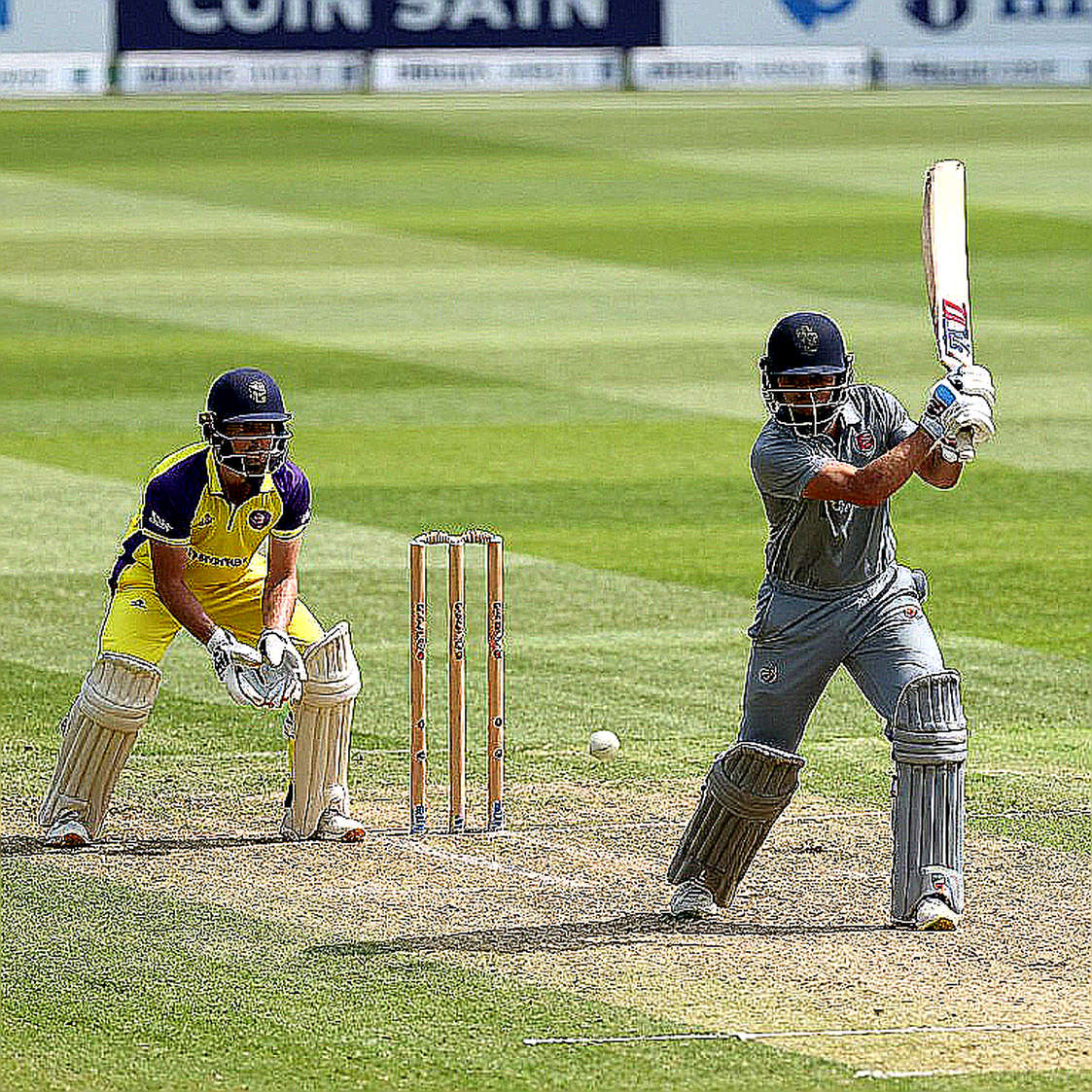
Sportingly, the Asia Cup's value is different. It has been played in both T20 and ODI formats, and in the shorter format it is a rare opportunity for Associate teams to face major sides. When Nepal or the UAE walk out against a top team, that match does not merely decide a result; it settles a financial argument — whether the investment is worthwhile for that Associate nation's sponsors.
Afghanistan: The Lesson Rankings Do Not Show
Afghanistan's rise is the most important story of Asian cricket's last decade, and also the least understood. A country without a continuous domestic structure in its own territory, which changed its 'home' base repeatedly, and whose players spent much of their time in overseas leagues, has nonetheless achieved a durable level of top-tier performance.
Much of that success belongs to league experience. Players such as Rashid Khan and Mohammad Nabi accumulated exposure in the world's leading T20 leagues, and that translated directly into national team performance. The lesson for Asian cricket is significant: a talent pipeline is built not only through domestic tournaments but through the exposure a player receives outside the domestic system.
But the same lesson reveals its own limits. League-based development works for players who get leagues — and leagues generally go to those already visible. For the tier below, that route is closed. Afghanistan's achievement is the achievement of its top players; there is still no robust domestic pathway for the talent beneath them. That distinction matters for continental policy, because if the development model is simply 'get into a league,' it cannot be replicated across other emerging nations.
Nepal, Oman, UAE: The Rise of the Second Tier
If Afghanistan is the exception in the first tier, Nepal is the clearest example in the second. Cricket is culturally deep there, the audience is passionate, and the team's arrival at the door of major tournaments proved that the shortage was never talent — only opportunity. The popularity of players such as Sandeep Lamichhane and Rohit Paudel shows that Associate cricket can build its own star economy. Nepal's real challenge is not performance but infrastructure and administrative stability.
The Gulf story runs on a completely different logic. The UAE has international-standard stadium infrastructure, two major T20 leagues and consistent hosting experience. Oman demonstrated that smaller nations can stage global events by hosting T20 World Cups. But both face a structural question: a large share of their teams depends on expatriate and second-generation players, and the long-term domestic pipeline remains thin. The contributions of players such as Bilal Khan or Asif Sheikh matter, but the road from a generation-dependent team to a permanent cricket culture is long.
Saudi Arabia has become the fastest-growing new centre in recent years. Under its broader large-scale sports investment strategy, cricket has found a place — events featuring international players, new grounds and long-term hosting ambition. This is a double signal for Asian cricket: new capital and a new market on one hand, and on the other the question of whether that investment converts into broad development or remains confined to event-based prestige.
Domestic Structure: The Real Inequality
Comparing domestic structures is harder than comparing international performance because there is no single metric. Even so, a clear dividing line is visible. India has a multi-layered domestic system spanning state level, franchise leagues and age-group tournaments. Pakistan and Sri Lanka have rich domestic traditions, but economic instability constrains their maintenance. Bangladesh has invested well in domestic structure over the past decade and the effect is gradually showing.
For Associate nations the gap is sharper still. Their domestic tournaments are often limited to a few weeks, players lack full-time contracts, and coaching structures remain largely volunteer-based. In such conditions the burden of international performance falls on the few players who bring league experience with them. This is a cycle that requires continuous funding to break — and continuous funding requires continuous performance, a closed loop.
The only practical way out is to link development assistance to outcomes, which is itself difficult. Outcome-based funding penalises the countries that most need support, because they lack the structure to show early results. This is the hardest design question in Asian cricket governance, and no board has a clean answer.
Money, Broadcast and a Dual Economy
Asian cricket's economic structure is split into two economies. The first comprises events whose value is set by broadcast rights — these carry guaranteed audiences and therefore investors. The second comprises events whose value is set by participation — lower audiences, lower broadcast revenue, but indispensable for development.
The problem is that both economies run on the same calendar. Whenever they collide, the second loses, because its benefit is not immediately visible. Associate tours are frequently cancelled or postponed for this reason. This is not a conspiracy; it is the direct result of incentives.
A less noticed dimension of this imbalance is broadcast technology. Digital streaming has lowered production costs, making coverage of smaller events more feasible than before. This is a genuine positive shift — domestic matches in Nepal, Oman or Hong Kong can now reach audiences that could not have imagined it a decade ago. But visibility and income are two different things; being watched does not automatically generate revenue.
Women's Cricket: The Fastest-Changing Segment
The change in Asian women's cricket over recent years has been faster and more structural than in the men's game. Teams from India, Pakistan, Sri Lanka and Bangladesh now sit on regular international calendars, and the Women's Asia Cup has become a permanent fixture. The effect is not cosmetic — it has given domestic women's tournaments a concrete target, without which investment would have been hard to justify.
But here a crucial distinction emerges. The biggest barrier in women's cricket is not audience or talent but contracts and security. Until women players have permanent contracts and match fees, a large share of talent will leave the sport. Some Asian boards have taken concrete steps; others have not. That difference will shape the continental competitive balance over the next five years — arguably more than any factor in the men's game.
Olympics 2028 and a New Route
Cricket's inclusion at the 2028 Los Angeles Olympics is a structural opportunity for Asian cricket, and it is largest for the teams that have so far been least visible on the global stage. The qualification route to the Olympics will differ from the World Cup route, and regional quotas may play an important role.
The direct effect will be to raise the importance of Asian regional events, since those will form the basis of ranking and qualification. This is a rare opportunity for the ACC: to convert its regional tournaments from 'development programmes' into 'qualification pathways.' If that happens, the investment case for Associate nations changes entirely, because small events would connect directly to the Olympics.
A caveat is necessary. Olympic cricket will be T20 and the number of teams will be limited. That means qualification competition will be as fierce as for the World Cup, and fiercer still because the global quota is small. Opening the Olympic door and walking through it are two different things.
Challenges Bigger Than the Calendar
Asian cricket's biggest challenge is not technical but political. The state of bilateral relations between member nations translates directly into decisions on hosting and participation. This produces a situation where event formats are shaped not by sporting requirements but by the need to maintain balance. The hybrid model is a product of that tension.
The second challenge is climate and weather. The monsoon in South Asia and extreme heat in the Gulf have become permanent features of calendar planning. This is not merely a logistics issue — it affects player safety, spectator experience and ticket revenue. In coming years the traditional October-November window is unlikely to remain as reliable as it has been.
The third is administrative capacity. Many member boards lack a full-time professional apparatus. Under the growing pressure of international events, that shortfall shows first at the hosting level — through delays, incomplete facilities and financial opacity.
The Road Ahead
Asian cricket's next decade will be decided by three questions. First: can multilateral events hold their ground against the pressure of bilateral series? Second: will Associate nations receive not just participation but permanent funding and structural support for domestic frameworks? Third: will boards change their priorities on contracts and security in women's cricket?
All three will be settled not on the field but in boardrooms. And that is the most honest conclusion of this story — the standard of Asian cricket has risen sharply over twenty years, but its governance architecture has not risen at the same pace. As long as that gap persists, continental cricket will not use its full capacity. The shortage is not of talent; it is of the systems that make talent durable. And those systems are built not on the field, but in decision rooms.