
Asian Cricket's New Equation: The Format War, League Money and a Three-Way Power Struggle
एशियाई क्रिकेट इस समय तीन संरचनात्मक दबावों के बीच है: प्रारूपों के बीच बढ़ती खाई, फ्रैंचाइज़ी लीग के पैसे का दबदबा, और बोर्डों के बीच राजस्व-नियंत्रण की खींचतान। मुख्य बातें: (1) टी20, वनडे और टेस्ट के आंकड़े एक-दूसरे पर लागू नहीं होते — प्रारूप तय किए बिना कोई मूल्यांकन मान्य नहीं। (2) घर और बाहर के प्रदर्शन का अंतर किसी टीम की असली साख का एकमात्र भरोसेमंद पैमाना है। (3) आईपीएल का मीडिया अधिकार मूल्य (2023-27 चक्र, लगभग ₹48,000 करोड़) और ऊंची नीलामी क़ीमतें अंतरराष्ट्रीय प्रदर्शन का सीधा संकेत नहीं हैं। (4) एनओसी, केंद्रीय अनुबंध और कैलेंडर का बोझ लीग-राष्ट्रीय टीम टकराव का मुख्य केंद्र है। (5) भारत-पाकिस्तान द्विपक्षीय ठहराव के कारण हाइब्रिड/तटस्थ स्थल मॉडल अपनाया जा रहा है। निष्कर्ष: अगले दशक की सफलता प्रतिभा की मात्रा से नहीं, बल्कि प्रारूप-विशिष्ट चयन, विदेशी परिस्थितियों में प्रदर्शन और लीग-देश के बीच स्पष्ट समझौते से तय होगी।
The way Asian cricket's strength is measured has changed fundamentally over the past decade. The old question was how many stars a team had. The new question is how long that star lasts, in which format, under which conditions. From India to Pakistan, Sri Lanka, Bangladesh, Afghanistan and now Nepal, the same pattern repeats: talent is not scarce; the system that shapes it for the right format at the right time is. And where the system is weak, the market fills the gap — in the form of franchise leagues.
Reading scorecards alone is therefore no longer enough. Three forces operate behind them: the contest between formats, the growing weight of league money, and the tug-of-war over revenue and control inside boardrooms. All three turn on a single axis — the gap between home and away performance.
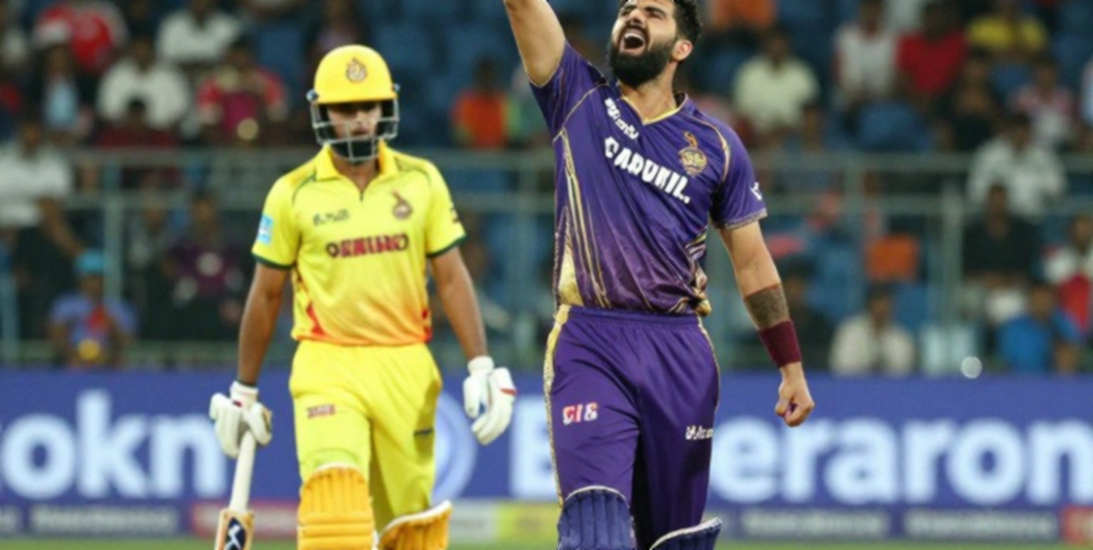
Three formats, three different games
T20, ODI and Test are not three versions of one game; they are three games. A batting strike rate of 145 is routine in T20 death overs, excellent in ODI middle overs, and meaningless in Test cricket. An economy rate under seven is outstanding in T20 and irrelevant as a Test measure. Until the format is fixed, no number is good or bad in itself. This is Asian cricket's first and largest problem: selection and evaluation processes routinely borrow evidence from one format to justify conclusions in another.
That directly shapes role definition. Opener, anchor, finisher, seamer, spinner, all-rounder, keeper — each carries different benchmarks. An anchor's 130 strike rate in T20 can be structurally correct; a finisher's 130 is a liability. Without a settled role, praising or condemning a statistic is equally wrong.
The third effect lands on Test cricket. The Asian calendar is squeezing the five-day game. Outside India, nearly every Asian side plays a handful of Tests a year. For Sri Lanka, Bangladesh, Pakistan and Afghanistan, red-ball cricket is no longer a regular competition but a seasonal exception. How do you evaluate a skill that is barely practised?
Home and away: the real test of credibility
Cricket's home-away differential is wider than in almost any other sport. Subcontinental pitches help spinners, England offers swing and seam, Australia offers bounce and pace. Home numbers therefore often mask weaknesses. A domestic average above fifty alongside an overseas average in the thirties is not an exception in Asian cricket; it is a pattern.
The true measure of any side is how it performs in foreign conditions. A team that only wins at home can sit high in the rankings with its credibility incomplete. India's recent overseas successes matter for exactly this reason, and it is the central challenge for Pakistan and Sri Lanka — how quickly their structures fray once they travel.
One more factor is routinely ignored: the toss and the weather. In dew-affected subcontinental matches the toss decides nearly half the result. In rain-affected games the Duckworth-Lewis-Stern method turns the contest into different arithmetic altogether. Unless these are stripped out, no performance can be honestly assessed.
League money and international credibility are different variables
IPL media rights for the 2026-27 cycle were valued at roughly ₹48,000 crore. That single figure maps the economic centre of Asian cricket. Pakistan Super League, Bangladesh Premier League, Lanka Premier League and the Gulf's ILT20 all operate in the shadow of that economic structure.
But a basic confusion recurs: a high auction price and international mastery are independent variables. A large bid does not mean a player will be equally effective in Tests or on overseas tours. The reverse is equally true — many Test specialists are undervalued at auction because their skills do not fit the format the league business is built on.
Rishabh Pant's ₹27 crore deal at the 2026 mega auction was the largest in Indian cricket to that point. It measures market appetite, not future cross-format contribution. Weighing the two on the same scale is the error repeated in almost every Asian cricket debate.
Auction prices also hide the type of premium: local young star, all-rounder, scarce role, or plain panic bidding. Without separating these four, no deal can be called right or wrong.
NOCs, workload and the calendar knot
The tension between league and national duty is Asian cricket's most live structural problem. Central-contract discipline, board control over No Objection Certificates, and the growing pattern of players stepping away from bilateral internationals to be available for leagues are three sides of one coin.
The Indian board linked central contracts to domestic participation, signalling clearly that national commitment is non-negotiable. Pakistan's NOC policy has shifted repeatedly, making league availability alternately easy and difficult. In Bangladesh and Sri Lanka some players have retired from international cricket to prioritise leagues — the sharpest challenge for smaller boards, whose financial capacity to retain players is limited.
The calendar knot tightens it further. Multiple overlapping leagues, bilateral series, ICC events and domestic competitions exhaust both body and mind. Fast bowlers carry the heaviest load, and injury risk connects directly to a team's long-term performance.
Revenue sharing and governance
Governance debates always begin with a concrete trigger — a board decision, a rule dispute, an integrity signal. But the framework is fixed in advance: India holds the largest share of ICC revenue distribution, and that fact sits at the centre of Asian cricket politics.
The freeze on bilateral series between India and Pakistan has held for years. The workaround has been tournaments at neutral venues — the 2026 Asia Cup was played under a hybrid model, and at the 2026 Champions Trophy all of India's matches were staged at a neutral venue. The model is workable, not durable. It keeps fans away from the fixture that remains Asian cricket's largest economic and emotional centre.
Integrity runs alongside. Asia hosts leagues at many levels, and where financial oversight is thin the corruption risk naturally rises. This is not an allegation but a structural risk category that monitoring systems must account for.
The talent supply chain: where the foundation is weak
Under-19 cricket, A-team tours, domestic tournaments and academies are the four pillars of long-term strength. India's system is strongest precisely in bench depth: when one player drops out, another arrives at nearly the same level. Sri Lanka and Bangladesh produce talent but lack consistency. Afghanistan's T20 rise is the product of academy-based preparation, but that same structure is still on trial in the longer formats.
A new dimension has entered the chain — associate sides. Nepal, Oman and the UAE are no longer merely participants; they occasionally trouble the bigger teams. Women's cricket expansion is an important investment in the same direction, though its financial base in Asia is not yet strong.
Narrative, overhype and the fan
South Asian cricket media has a familiar instinct: to crown stars quickly. One good innings produces the label of the next great batter. Historically, dozens of such labels never reached sustained international output. That is not a player's failing but the impatience of media and market.
The consequence is expectation outrunning reality. When the gap opens, the reaction is equally intense — the same player moves from hero to target within months. Only one route breaks the cycle: talk from data, not emotion.
The road ahead
Asian cricket's real challenge is not a shortage of talent. It is the structure in which that talent develops — whether clear boundaries between formats survive, whether a fair and explicit settlement between leagues and national teams is built, whether boards keep investing in domestic structures despite limited resources.
Teams that answer these questions will not merely sit high in the rankings; they will win in foreign conditions, and that is the only real measure of credibility. Teams that defer them will have a few brilliant nights and fall steadily behind over the long run.