
होमField HockeyThe Limits of the Deep Block: Bangladesh Draw 1-1 with China but Finish with One Point and Two Goals
The Limits of the Deep Block: Bangladesh Draw 1-1 with China but Finish with One Point and Two Goals
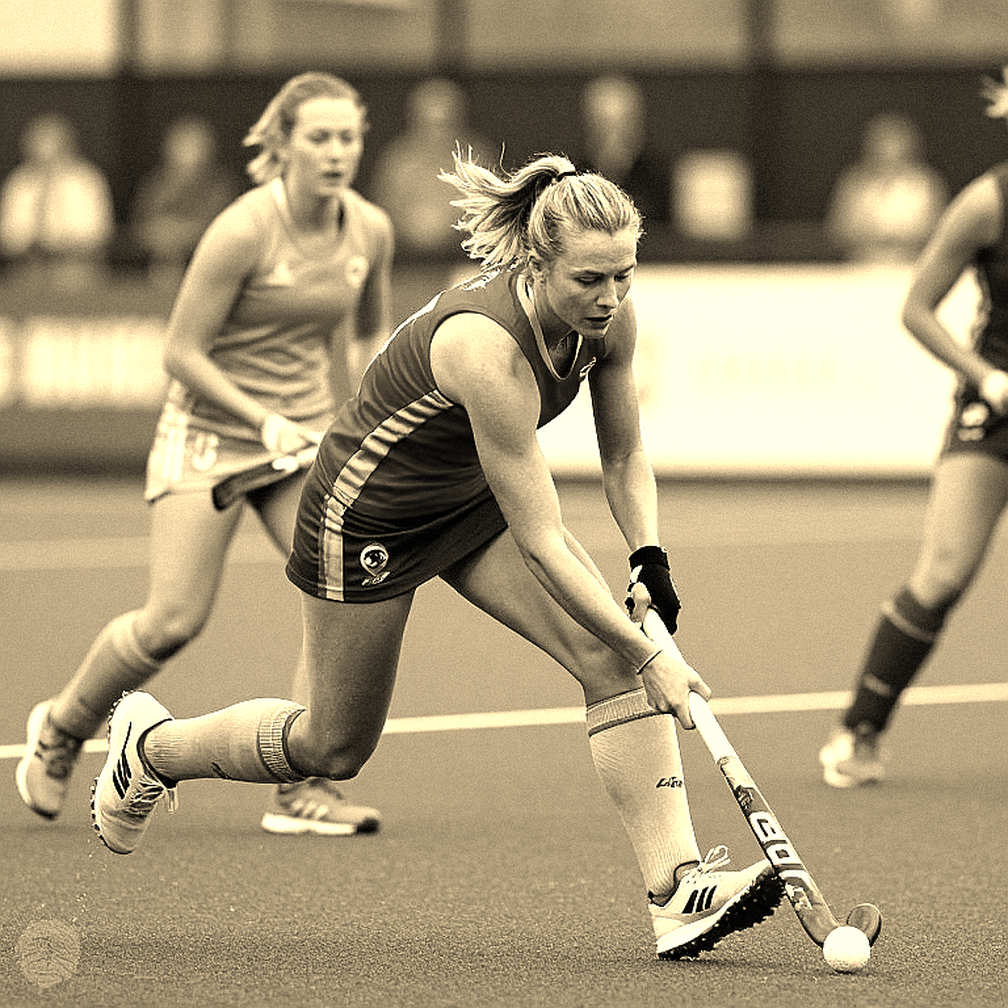
बांग्लादेश पुरुष हॉकी टीम ने जालंधर में एशियाई चैंपियंस ट्रॉफी के ग्रुप चरण में चीन के साथ 1-1 ड्रॉ खेला, जहां कप्तान अशरफुल इस्लाम ने तीसरे क्वार्टर में पेनल्टी स्ट्रोक से बराबरी की। पांच मैचों में टीम को केवल एक अंक मिला, दो गोल किए और कम से कम 24 गोल खाए, जिसमें भारत से 0-13 की हार शामिल है। टीम की रणनीति गहरे बचाव और सेट-पीस पर निर्भर रही, कोई ओपन-प्ले गोल दर्ज नहीं हुआ और पेनल्टी कॉर्नर से भी कोई गोल नहीं बना। चीन के खिलाफ ड्रॉ को प्रगति नहीं, बल्कि विरोधी के रोटेशन और कम जोखिम वाले मैच-प्रबंधन का नतीजा माना जाना चाहिए।
Bangladesh's men's hockey campaign at the Asian Champions Trophy in Jalandhar ended with a single point. Their final group match against China finished 1-1, but two goals scored and at least 24 conceded across five matches makes it clear that the problem is not one bad day but an entire playing model. Four defeats and one draw is the record of a team that, at Asia's top level, is currently surviving rather than competing.
Quarter by quarter: the 1-1 draw
China controlled possession in the first quarter and took the lead. Bangladesh held firm in the second and conceded nothing. In the third, the team was awarded a penalty stroke, which captain Ashraful Islam converted to make it 1-1. Neither side scored in the fourth and the match ended level. The crucial detail: Bangladesh's only goal did not come from a constructed move, it came from a set award. The team did not create a goal; a goal was handed to it. The quarter pattern is also telling, a slow start, a structural correction after half-time, and a fade in the final quarter.
The full campaign
It began with a 13-0 defeat to India. That scoreline is not an accident, it is a measurement of the tier gap. A thirteen-goal margin describes a defensive block that broke entirely under sustained pressure, with no effective first press and no outlet, and almost certainly a collapse in the second and third quarters once the result was gone. Then came a narrow 1-0 loss to Japan, a 1-6 defeat to Malaysia, and finally the 1-1 draw with China. Five matches, one point, two goals scored, at least 24 conceded.
The available record contains two different Japan results, a 1-0 loss and a five-goal defeat. Since a single round robin cannot contain two matches against the same opponent, the most reasonable reading is that results from two different competitions have been stitched together, or that one figure is an error. Both are reported here as available, but any conclusion that depends on exact margins should be treated cautiously. The signals that survive the inconsistency are the robust ones: one point from five matches, two goals scored, at least 24 conceded, and a lone goal from a penalty stroke in the match under review.
Tactics: deep block, set-piece dependency
The structure is obvious, a deep and compact block, low possession, and goals sought mainly from set pieces. That model only works if a team stays goalless for long stretches and converts one of its rare chances. Against a fast, high-pressing side like India, the same structure turns into a thirteen-goal defeat. Against India, Japan and Malaysia, Bangladesh showed neither sustained possession, nor consistent circle entries, nor any coherent counter-attack. No open-play goal appears in the record; both goals came from dead balls. That is the signature of a team that cannot generate sustained circle penetration and therefore cannot release itself from pressure.
Technically, this side belongs to no modern school. The European model runs on structured possession and a high press, the Australian model on intense physical transition, and India's on individual skill and speed. All three presuppose the ability to sustain possession chains. What Bangladesh currently shows is not a system but a survival model.
Penalty corners, not penalty strokes
This is a fine but decisive distinction. A penalty corner is a chance a team manufactures, by carrying the ball into the circle, pressing defenders and forcing errors. A penalty stroke is awarded, it is not engineered. Bangladesh's only goal came from a stroke, and no penalty-corner goal appears anywhere in the tournament record. At Asian top level, penalty-corner conversion typically runs between 25 and 40 percent, yet no data is available on how many corners Bangladesh won or converted. Until a team can reliably earn two or three corners a match, it has no durable scoring weapon even against weaker opposition.
Fitness and schedule load
Four quarters, a match every other day and a thin squad. That combination proved costly. The 13-0 defeat to India was not only tactical but physical. Conceding nothing in the fourth quarter against China looks encouraging, but there is another reading, China took no risks late, protected its position and prioritised semi-final preparation. Bangladesh's solidity was as much a product of the opponent's game management as of its own defence.
Do not read the 1-1 as progress
This is the most easily misread result of the campaign. It was Bangladesh's final group match, and China had already secured progression. In such fixtures, stronger teams rotate, manage minutes and protect key players. A deep block is precisely the system that punishes a low-tempo, rotating favourite. The point was produced less by Bangladeshi progress than by the game state.
Ashraful Islam's role
The most important individual contribution came from captain Ashraful Islam, who converted the penalty stroke. Two things follow, he is the designated set-piece taker, and he is the on-field anchor trusted in high-pressure moments. The problem is that such moments arrive rarely, because chance creation rests with the collective and the collective is not currently delivering.
The road ahead
Three areas need work. First, possession, a team sitting below 40 to 45 percent cannot sustain any modern model. Second, penalty corners, there must be a plan and a reliable drag-flicker capable of earning two or three corners a match and converting one or two. Third, fitness, collapsing in the fourth quarter of a four-quarter format is the central vulnerability, and rotation plus load management is the answer. Chasing results without fixing these three would be self-deception.
Fact-check note
In the current FIH World Rankings, Bangladesh's men sit outside the top 25, generally in the 30 to 40 band, while China is in the 20 to 30 band. Both figures remain pending verification; rankings are also distorted by participation frequency, which systematically underrates low-event nations such as Bangladesh. Separately, the competition referred to in the source is the AHF Asian Champions Trophy, not the discontinued global FIH Champions Trophy, and the two should not be conflated.
संबंधित खिलाड़ी
अनुशंसित
The Empty Column: Indian Hockey's Real Crisis Never Reaches the Scoreboard2026-10-28
Five Matches, Seven Days, Two Back-to-Backs: Bangladesh's Real Opponent Is the Calendar, Not the Camp2026-10-24
Seven Days, Five Matches, Two Zero-Rest Turnarounds: Bangladesh's Hockey Test Begins With the Calendar2026-10-24
From Kalinga's Silence to Rourkela's Full House: The Two Ledgers of Indian Hockey2026-10-28
Hockey News Report Cannot Be Published: Source Input Empty and Sport Type Unresolved2026-11-01
The 20th Trinity–Thomian Hockey Encounter: What the Astro Turf Showed, and What the Sheet Never Recorded2026-10-25
Seven Days, Five Matches, Two Back-to-Backs: Bangladesh's Real Tactics Are Written in the Calendar, Not the Captain's Quote2026-10-24
Asian Champions Trophy: The Structural Weakness Behind Bangladesh's 1-1 Draw with China2026-11-03
अनुशंसित
Bangladesh Hold China 1-1 in Jalandhar, But the Bigger Hockey Picture Remains Blurred2026-11-03
Hockey News Report Cannot Be Published: Source Input Empty and Sport Type Unresolved2026-11-01
From Kalinga's Silence to Rourkela's Full House: The Two Ledgers of Indian Hockey2026-10-28
Trinity–Thomian Hockey: The Turf-Side Evidence of a Century-Old Rivalry, and the One Row That Will Not Reconcile2026-10-25
Seven Days, Five Matches, Two Zero-Rest Turnarounds: Bangladesh's Hockey Test Begins With the Calendar2026-10-24
Five Matches, Seven Days, Two Back-to-Backs: Bangladesh's Real Opponent Is the Calendar, Not the Camp2026-10-24
Asian Champions Trophy: India Thrash China 5-2, but Three of Five Goals Came From Penalty Corners — the Real Test Is Still Ahead2026-10-31
अनुशंसित
Trinity–Thomian Hockey: The Turf-Side Evidence of a Century-Old Rivalry, and the One Row That Will Not Reconcile2026-10-25
The Limits of the Deep Block: Bangladesh Draw 1-1 with China but Finish with One Point and Two Goals2026-11-03
Asian Champions Trophy: India Thrash China 5-2, but Three of Five Goals Came From Penalty Corners — the Real Test Is Still Ahead2026-10-31
Five Matches, Seven Days, Two Back-to-Backs: Bangladesh's Real Opponent Is the Calendar, Not the Camp2026-10-24
Bangladesh Hold China 1-1 in Jalandhar, But the Bigger Hockey Picture Remains Blurred2026-11-03
Hockey News Report Cannot Be Published: Source Input Empty and Sport Type Unresolved2026-11-01
The 20th Trinity–Thomian Hockey Encounter: A Tactical Post-Mortem of a Century-Old Rivalry on Colombo's Astro Turf2026-10-25
Asian Champions Trophy: The Structural Weakness Behind Bangladesh's 1-1 Draw with China2026-11-03