
A Fifty in 14 Balls: Prema Rawat's Record, and How It Should Actually Be Read
प्रीमा रावत ने सीनियर महिला टी20 ट्रॉफी (बीसीसीआई घरेलू प्रतियोगिता) में उत्तराखंड के लिए हैदराबाद के ख़िलाफ़ गहुंजे, पुणे में केवल 14 गेंदों में 50 रन बनाए — 6 चौके, 4 छक्के, स्ट्राइक रेट लगभग 357। यह महिला टी20 क्रिकेट में उपलब्ध डेटा के भीतर सबसे तेज़ अर्धशतक है, जिसने केली, हैरिस और फ़ातिमा साना के 15 गेंदों के संयुक्त रिकॉर्ड को पीछे छोड़ा; यह दावा केवल उन मैचों पर लागू है जिनका आँकड़ा उपलब्ध है। उसी मैच में उन्होंने 4 ओवर में 12 रन देकर 2 विकेट लिए (इकॉनमी 3.00); उत्तराखंड ने 187/2 बनाकर हैदराबाद को 98/8 पर रोका और 89 रन से जीता। 24 वर्षीय रावत मूल रूप से लेग-स्पिनर हैं और उनके टी20ई करियर में 7 विकेट, औसत 18.85 और इकॉनमी 5.73 है — छोटा नमूना, पर गेंदबाज़ी प्रोफ़ाइल संगत। मुख्य सावधानी: यह घरेलू स्तर का रिकॉर्ड है और बल्लेबाज़ी का सबूत एक ही पारी पर आधारित है, इसलिए इसे अंतर्राष्ट्रीय बल्लेबाज़ी क्षमता के प्रमाण के रूप में न पढ़ा जाए; स्रोत में दर्ज तारीख़ (3 नवंबर 2026) भी अपुष्ट है और उद्धरण से पहले सत्यापन योग्य है।
At the Maharashtra Cricket Association Stadium in Gahunje, Pune, Uttarakhand's Prema Rawat scored a half-century off just 14 balls in the Senior Women's T20 Trophy — the fastest fifty recorded in women's T20 cricket, at least among matches for which ball-by-ball data exists. The BCCI Domestic handle carried it as a 'world record alert', and the same post carries the qualifier: the comparison applies only to matches where data is available.
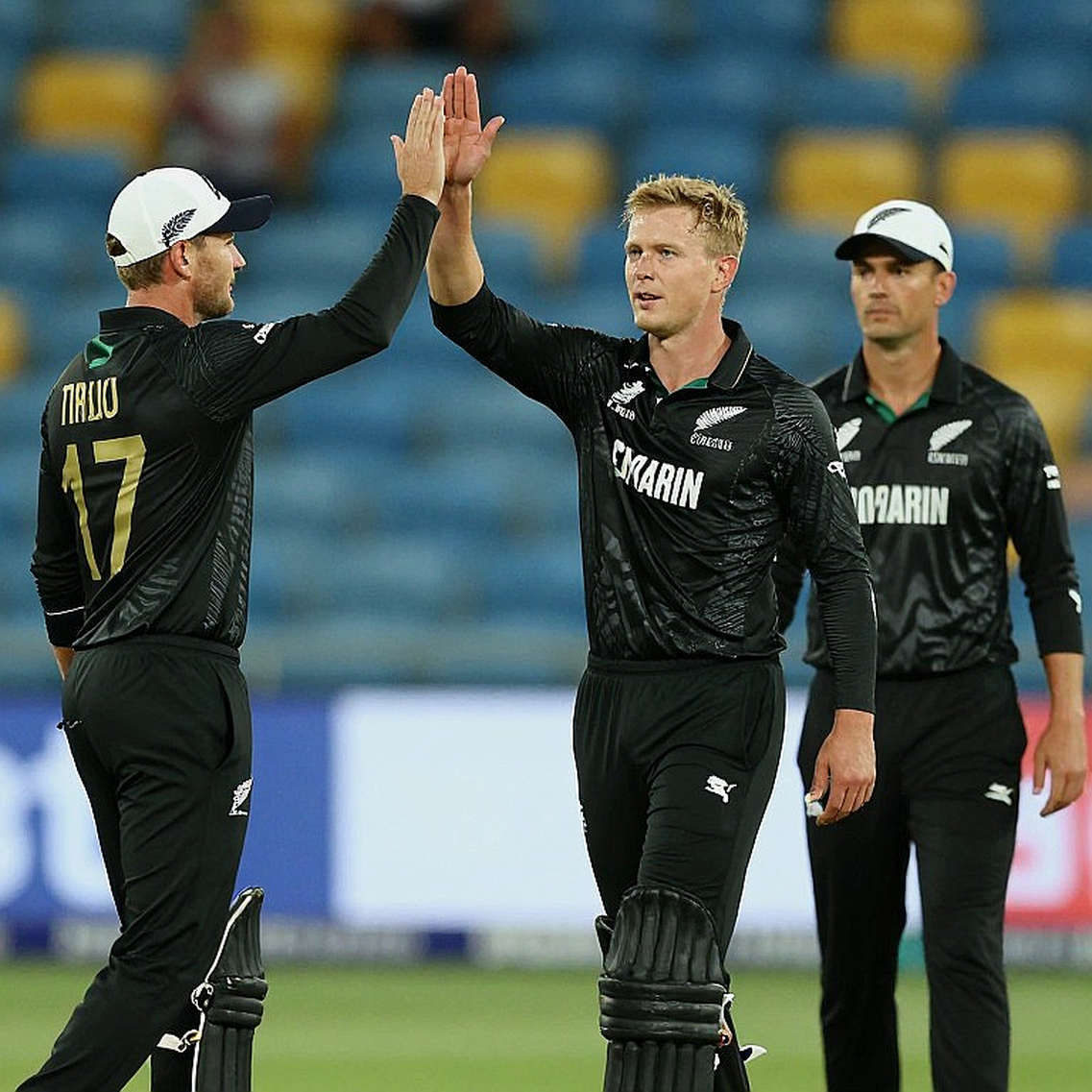
That single sentence is the most honest part of the whole story. The number is extraordinary and it is real. The narrative being wrapped around it — 'stunning all-round show', 'new superstar' — has already travelled further than the number does. This report separates the two.
The arithmetic of the scorecard
Rawat walked in at No. 4 with 17 balls remaining. She faced 14 of them and made 50. Six fours and four sixes — 48 of her 50 runs came in boundaries, only two were run. That is a 96 per cent boundary-run share, and the detail matters. A 14-ball fifty built on running would invite questions about fielding standards and overthrows. This one was not. Six fours and four sixes mean the runs came from clean striking: a genuine power-hitting record, not a fielding-assisted one.
Her strike rate across those 14 balls was roughly 357 (50 runs / 14 balls x 100). That number is startling on its own, but its statistical limitation has to be stated: 14 balls is a very small sample. A strike rate that high in one innings is entirely possible when a batter is in take-risk mode and the bowling side is off its lengths. The record should be entered; it should not be read as proof of capability.
The context of 17 balls: a designated finisher
Uttarakhand made 187 for 2 — a strong but not extreme domestic total. Rawat arrived at No. 4 with the platform set and the overs running out. The inference is straightforward: the team used her as a finisher, not an anchor. That is relevant. It tells us Uttarakhand already trusts her hitting at domestic level. It does not tell us that the role translates internationally.
The match itself was one-sided. Hyderabad were restricted to 98 for 8 and Uttarakhand won by 89 runs. This was not a fixture decided by one freak innings; the team performance was comprehensive, and the bowling had already done its job. The record innings is the attraction of that win, not its foundation.
Rawat also took 2 for 12 from four overs in the same match, an economy of 3.00. That is a genuine dual contribution, rare in the game, and it should be acknowledged plainly rather than inflated.
Who Prema Rawat is: a leg-spinner first
Here is the point most often missed. Rawat is, by origin and primary identity, a leg-spinner. At 24, a wrist-spinner is typically entering prime years, because spin bowlers mature later than pace bowlers. Her international record is small — seven T20I wickets — but the direction of that small sample is clear: an average of 18.85 and an economy of 5.73.
In women's T20I cricket, an economy under six is strong, and an average between 15 and 22 sits in the elite spin band. Her bowling profile, despite the small sample, is consistent and defensible. The 2 for 12 in the same domestic match — economy 3.00 — aligns with it. When a domestic figure and an international figure point the same way, confidence in the conclusion rises. That is why the most reliable element in this story is not her batting. It is her bowling.
On the other side, there is no established batting profile at all: no career average, no strike rate, no innings count, no record of sustained domestic output. A 14-ball innings is a high-variance event. Every season produces a few of those attached to some name or another; only a fraction become durable batting identities.
The 'all-round show' framing: where it holds and where it does not
In cricket, 'all-rounder' means sustained starting-XI standard output in both batting and bowling. By that definition, Rawat is currently an emerging bowling all-rounder, not an established one. Her bowling half is supported; her batting half rests on a single innings.
This needs saying because the headline and the framing merge the two halves. The effect is that a strong, validated bowling identity gets presented alongside a weak, unvalidated batting claim — and the reader's attention shifts from the part with evidence to the part without it.
It would also be wrong to say the innings does not matter. The opposite: a 24-year-old international spinner producing a domestic fifty at a strike rate of 357 is a positive signal for India's domestic women's structure. It suggests the domestic competition is incubating power-hitting, not only defensive bowling. That is an important signal — but it is a signal, not a verdict.
The definition of the record and its data ceiling
The official post itself carries the qualifier that the comparison covers only matches with available data. The 'world record' claim is therefore a best-available-data record, not a certified universal one. The distinction looks small and is not: large volumes of women's domestic and regional cricket worldwide are not ball-by-ball archived. Any 'fastest' claim is, by necessity, true within a boundary.
A second definitional feature: the 15-ball joint mark that has been superseded comes from three different kinds of competition — the Super Smash, the T20 Blast and T20Is. The comparison table therefore places a domestic record beside an international one (Fatima Sana's T20I fifty). That is standard statistical practice, but it creates a reader impression that all these feats sit at the same level of difficulty. They do not.
Domestic versus international: the biggest separator
The feat occurred in the Senior Women's T20 Trophy, a BCCI domestic competition, not in international cricket. This context must be applied to every conclusion.
Bowling quality, experience and pressure in a domestic T20 trophy are naturally lower than at international level. That is a structural fact, not a slight on any player. And the composition of the opposition attack — the pace-spin mix, the experience level — is nowhere recorded in this report. The difficulty of the record therefore remains only partly evaluated. The data is accurate; its competitive context is domestic. Both statements are true and both need writing.
The venue question runs the same way. Gahunje is not Uttarakhand's home ground, so this was effectively a neutral venue. No pitch report is available, no dew or weather information is given. These factors can neither be assessed nor dismissed.
Team context: Uttarakhand, not India
The operative team in this story is Uttarakhand, not India. That distinction should be preserved. The only India data point is Rawat's seven-wicket T20I career record. Extending from that to any conclusion about the Indian team's structure would be an overreach.
Still, the real team signal is a pipeline signal: a 24-year-old international spinner producing a record domestic batting innings suggests a possible option is developing for India's lower-middle-order depth. The emphasis belongs on 'possible'. One innings is not enough to establish selection impact.
Strategically, a leg-spinner who can score at 150-plus in the lower order is extremely valuable in T20 cricket, because she frees a squad slot. But that is an upside scenario conditional on sustained output, not a present fact. And the article does not state her batting position at international level. A domestic No. 4 does not translate automatically.
Signals within the women's cricket ecosystem
The weakest signal in the broader picture is commercial. This is a non-franchise domestic tournament. There is no broadcast-rights data, no franchise valuation, no player salary information, no auction or transfer information. Any conclusion on this dimension would be speculation, and speculation should not be written as fact.
One directional inference is possible: a viral domestic record can raise a player's visibility, which could matter in a future women's franchise auction. That is possible and entirely conditional; confidence in it is low and nothing further can be said.
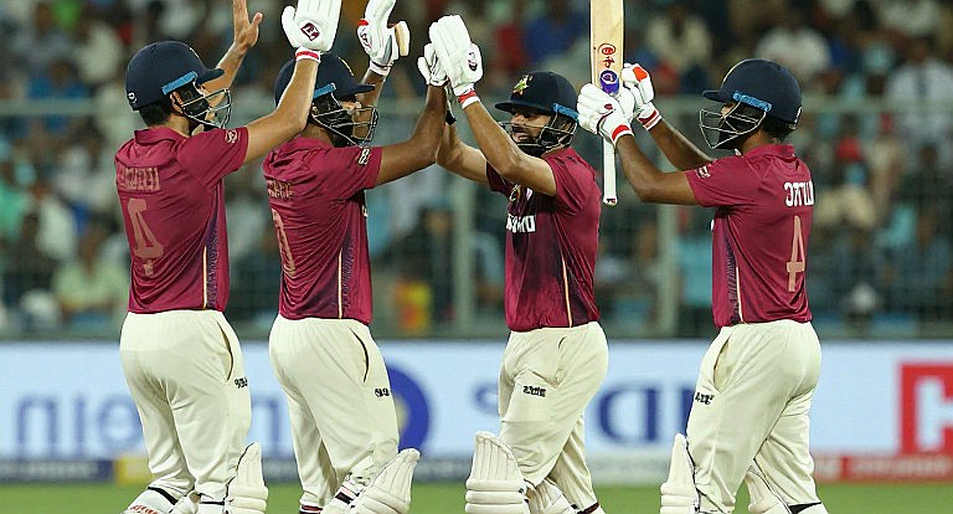
What is more solid is that the record was amplified by BCCI's official domestic handle. A board promoting its own domestic women's game is itself a signal that the board is investing in the visibility of that product. That is a promotional observation, not a commercial conclusion.
Risk: over-extrapolation is the dominant hazard
If one risk sits above all others, it is interpretive — treating a 14-ball domestic innings as proof of international batting capability. The risk is higher precisely because the data is real and official; when the foundation is sound, the interpretation built on it becomes harder to challenge.
The second risk is tier confusion — calling a domestic record an international T20 record. The remedy is simple: tag it every time as the Senior Women's T20 Trophy (domestic).
The third is definitional overclaim — a 'world record' that is bounded by data availability. The caveat should travel with every citation.
The fourth is lower-profile but real: workload. An economy spinner adding lower-order hitting increases physical and mental load. No workload history is given here, so this is a latent concern, not an established finding.
The fifth is small but practical: date verification. The embedded BCCI Domestic post in the source material is dated 3 November 2026. That is either a forward date in the source or a typographical or extraction error. Other dates in the article — a July 2026 T20 Blast fifty, a 2026 T20I fifty — are internally consistent with a 2026 timeline, but they do not confirm that this event is current. It should be treated as recent but date-unverified, and the date should be checked before any republication.
The public narrative: expectation versus evidence
The narrative is currently in an acceleration phase — the record-alert stage, before a mainstream climax. Such stories typically run for weeks to about three months unless an international performance provides fuel.
On the expectation gap: the bowling expectation is reasonable, supported by a 5.73 T20I economy and 2 for 12. The batting expectation is far ahead of its evidence, which is one domestic innings. The 'all-round show' claim sits between the two and is therefore mildly over-optimistic.
A pattern deserves naming, because Indian sports media repeats it: one spectacular domestic innings, one superlative adjective ('fastest'), and then a conversion in public perception into 'the next big thing'. The brake on that pattern is the sentence already present in the official post — that the comparison is limited to available data. If that sentence travels everywhere with the claim, the narrative stays honest.
A two-sided assessment: what is genuinely new
The positive side is clear. Fifty runs and 2 for 12 in one match is a rare dual contribution even at domestic level and should not be understated. Her economy profile is internally consistent, making her a stable and defensible strength. And most importantly, this is a multi-skill signal emerging from India's domestic women's structure — the message that domestic cricket can produce power-hitting is valuable in itself.
The cautious side is equally clear. The batting identity is unproven. Her international batting role is unknown. The bowling sample is also small — seven T20I wickets is statistically fragile and needs reassessment over the next 10 to 15 T20Is. And the whole story's largest contextual separator is that this is domestic cricket.
What to track next
First: follow-up batting innings. Watch domestic scorecards and BCCI statistics for sustained 140-plus strike rates across matches. If they appear, she can be treated as a genuine all-rounder. If not, this remains an outlier.
Second: India T20I selection and batting position. If selectors push her up the order, they are buying the batting narrative. If she stays at eight or nine, that is an acknowledgment that bowling remains the primary identity.
Third: T20I economy stability. If economy holds near 5.7 across 15-plus wickets, the containment-spinner identity is confirmed.
Fourth: formal ratification of the record. If BCCI or ICC statistical channels enter it with the caveat, the definitional question is settled.
Conclusion
Prema Rawat's 14-ball fifty is a genuine, officially flagged record within the bounds of available data. Her 2 for 12 and a T20I economy of 5.73 mark her as a legitimate economy leg-spinner. Neither of those facts needs hedging.
But the 'stunning all-round show' framing magnifies the batting evidence, which currently rests on one domestic innings. Reading it as international batting capability would be premature. The real story is a multi-skill emergence signal from India's domestic women's pipeline. That is significant, it is encouraging, and it is a beginning — not a coronation.