
Asian Cricket's Real Battle Is Being Fought Off the Scoreboard
एशियाई क्रिकेट का असली केंद्र मैदान नहीं, ढाँचा है। तीन कारक इसे तय करते हैं: (1) फॉर्मेट-आधारित विश्लेषण — टेस्ट, वनडे और टी20 के आँकड़े एक-दूसरे के सबूत नहीं हो सकते; (2) भारत-पाकिस्तान द्विपक्षीय श्रृंखला का लंबे समय से बंद रहना, जिससे आमना-सामना केवल आईसीसी और एशियाई क्रिकेट परिषद के आयोजनों तक सिमटा है और तटस्थ/हाइब्रिड स्थल वाले मॉडल बने; (3) फ्रेंचाइज़ी लीगों (आईपीएल, पीएसएल, आईएलटी20, बीपीएल, एलपीएल) का अंतरराष्ट्रीय कैलेंडर से टकराव, जिससे वर्कलोड प्रबंधन और एनओसी आधारित बोर्ड नियंत्रण उभरा। साथ ही, वाणिज्यिक मूल्य (नीलामी दाम, प्रसारण सौदे) और खेल-कौशल का मूल्य अलग-अलग मापदंड हैं। आगे देखने योग्य संकेत: कैलेंडर टकराव का समाधान, आईसीसी राजस्व बँटवारे का सहयोगी देशों पर असर, और फॉर्मेट-वार आँकड़े पढ़ने की आदत में बदलाव।
The centre of gravity in international cricket has shifted steadily eastward over the past two decades. The largest spectator base, the most expensive broadcast rights and the busiest international calendar are now overwhelmingly concentrated in Asia. But measuring that dominance purely by scoreboards is a basic error. The real Asian cricket story is being written off the field: in broadcast auctions, in boardroom politics, in the calendars of franchise leagues and in the politics of player workload.
Start with a discipline whose neglect is the most common analytical failure in this domain — format discipline. A Test average, an ODI strike rate and a T20 economy rate belong to three different sports, and presenting one as evidence for another is a factual deception. Debate around Asian cricket falls into this trap constantly: records compiled in a domestic T20 league are treated as proof of Test-match capability, when humid air, a seaming pitch and the pressure of two new balls demand a completely different player. Likewise, numbers built on spin-friendly home surfaces do not automatically survive overseas quick pitches. Format and conditions must be established first; only then does any statistic carry meaning.
The second great structural story sits between India and Pakistan, and it is a story about calendars rather than cricket. Bilateral series between the two have been frozen for years; face-to-face meetings are now largely confined to ICC and Asian Cricket Council events. That is why every India-Pakistan fixture becomes more than a match, with ticket, broadcast and advertising prices far exceeding ordinary series. Viewing it through a purely sporting lens is misleading; it is fundamentally a political-administrative standoff whose consequences show up on the calendar.
The hybrid and neutral-venue models are a product of that standoff, where hosting rights sit with one country on paper while matches are played in another country or on neutral soil. The arrangement keeps tournaments alive, but the cost is paid in home audiences, lost local economic benefit and player travel fatigue. Almost every major event in Asian cricket today has such a compromise standing behind it.
The third pillar is the franchise league. The IPL is now the largest commercial platform in world cricket, and the Pakistan Super League, ILT20, Bangladesh Premier League, Lanka Premier League and Nepal's newer competitions are carving out their own space in the same mould. These leagues have opened new income routes for players and given cricketers from smaller nations a stage their national calendars never offered. The flip side is that these leagues collide directly with the international calendar.
The result is extreme calendar load. A leading Asian player today faces three competing demands — national team, franchise contract and domestic tournament — each with its own timeline. That pressure produces workload management, rest-driven selection absences and injury protocols. When a player withdraws from an international series and appears in a league weeks later, the argument should be about the system that creates such a calendar, not about the player's commitment.
This is where board power enters. Permission to play in a foreign league is granted through a No Objection Certificate, and that document becomes far more than paperwork — it becomes an instrument of control. Central contracts, availability clauses and national-team priority together determine the shape of a player's earnings and career path. In Asian cricket the board is not merely a host; it is the gatekeeper of the player's market.
Above that sits the politics of ICC revenue distribution. The Indian board's financial weight underpins the entire global structure, which is why every revenue cycle raises the question of whether money should be shared on development grounds or on market contribution. For associate members this is not a theoretical debate — it decides whether they get matches, coaches and grassroots infrastructure at all.
Within that same structure, the most hopeful story belongs to Afghanistan and Nepal. Afghanistan travelled from refugee camps to Full Membership and has beaten major sides in limited-overs cricket; Nepal has generated a following far larger than its resources. These examples show that Asia's cricketing strength is not confined to two nations, provided talent gets a stage.
The layer of women's cricket and derivative markets sits alongside this. Women's franchise leagues, new revenue from tickets, jerseys and streaming, and academy networks forming in smaller nations are shaping the blueprint for Asian cricket's next decade. Figures such as Virat Kohli and Babar Azam have been the biggest faces of that market, but the test of any structure is how it produces its next faces.
A crucial distinction must be understood here — commercial value and sporting value are not the same thing. A record auction price does not establish that a player is the most effective at international level, and a league's large broadcast deal does not prove that a country's domestic talent pipeline is strong. Conflating the two is the oldest habit in Asian cricket coverage, and the most expensive.
What should be watched next? Three signals: first, whether the clash between international and franchise calendars is resolved or simply deferred; second, whether revenue-sharing decisions translate into visibly expanded associate programmes or remain confined to statements; and third, whether reading statistics separately by format becomes a habit among both media and selectors. None of these answers will appear on a scoreboard. They will appear in the structure, which is where Asian cricket's real battle is being fought.
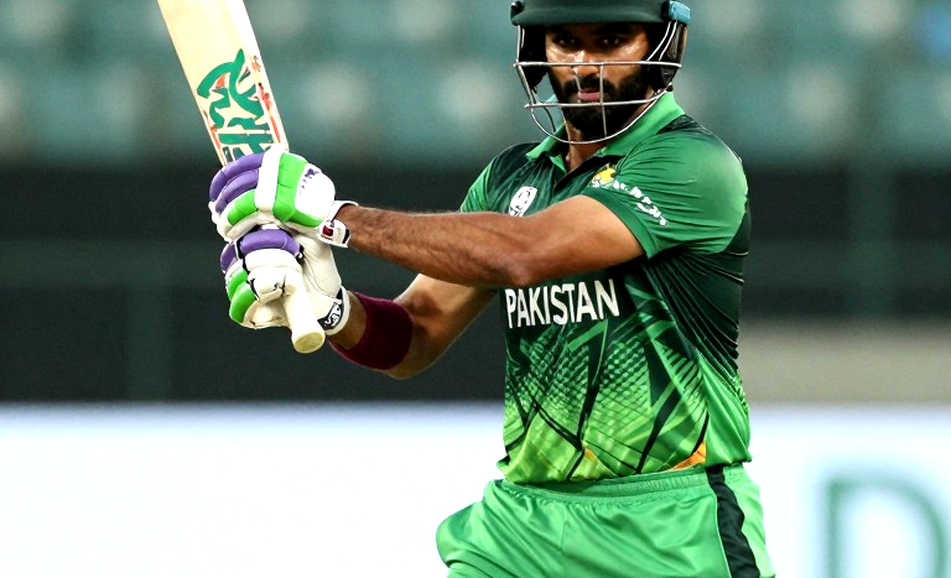
संबंधित खिलाड़ी
अनुशंसित
Mustafizur and Rishad's BBL Deals: The Bid Was Public, the Paperwork Stayed in the Room2026-10-29
The Shifting Geography of Asian Cricket: One Continent, Many Power Centres2026-11-01
Shaheen Afridi: 150-wicket milestone, but the greatness verdict is still pending2026-10-26
Adelaide's mural and the 50-day Christmas Test countdown: the cricket behind the Head-Carey wall2026-10-29
Jimmy Amarnath’s Amritsar Appeal: A City of Memory, a Hall Gate of Garbage, and an Unanswered Civic Complaint2026-10-25
Nineteen Matches, Zero Tests: The India–Pakistan Ledger That Reopens Every Tournament2026-10-30
Ishan Kishan's Record Season: 1,220 Runs Break Suryakumar's Indian Mark, 2,000 T20 Runs Milestone Reached2026-11-02
अनुशंसित
Rashid Khan Creates New History: First Bowler in the World to 200 T20I Wickets2026-10-31
The Shifting Geography of Asian Cricket: From a Superpower to Emerging Forces2026-11-02
Thirteen Point Two Overs: Abhishek Sharma's 113 and the 118-Run Powerplay That Stayed Out of the Headline2026-10-29
Mirpur's 74th Over: The Four-Wicket Ledger Hidden Behind 213/32026-10-29
Phillips's century as New Zealand finally stop India — an 87-run win, but the series was already decided2026-10-31
Pakistan Cricket's Real Selector: The Rupee, the Gas Levy, and the File That Reaches the PCB Balance Sheet2026-10-24
The Pink Jersey, the Signed-Shirt Auction, and the Number Nobody Accounted For2026-10-30
The Empty Dossier and the Noise Market: A Reliability Filter for the Transfer Window2026-10-29
अनुशंसित
Rashid Khan Creates New History: First to 200 T20I Wickets Across Men's and Women's International Cricket2026-10-31
Analysis Blocked: Empty Stage-1 Payload — No Cricket News Report Can Be Produced2026-11-02
The Empty File: The Verification Crisis in Asian Cricket Coverage2026-11-01
Hong Kong Sixes 2026: Afridi's Six-Hitting Blitz and a 31-Run Opening Over Seal Pakistan's Four-Wicket Win Over India2026-10-31
Asian Cricket's Real Battle Is Being Fought Off the Scoreboard2026-11-01
The Blank Column: Cricket's Most Trusted Record Is Rewritten Every Morning2026-10-31
Empty File, Clean Mind: Why a Cricket Data Desk Filed 'N/A' as the Story2026-10-28