
Pant's Fitness Test: The November 9 Exam, the November 19 First Ball, and the Hardest Selection Question In Between
रिषभ पंत 9 नवंबर को बेंगलुरु के सेंटर ऑफ एक्सीलेंस में मैच सिमुलेशन टेस्ट देंगे, जिससे न्यूजीलैंड टेस्ट सीरीज (पहला टेस्ट 19 नवंबर) के लिए उनका चयन तय होगा। CoE का मेल चयन समिति तक पहुंच चुका है, जबकि कोच गौतम गंभीर ने कहा है कि उनके पास कोई अपडेट नहीं। पंत ने DDCA के जरिए कहा है कि वे दौरे की उम्मीद करते हैं, वरना पूरा सैयद मुश्ताक अली ट्रॉफी खेलेंगे (14 नवंबर से शुरू)। मुख्य जोखिम यह है कि 9 नवंबर को क्लीयरेंस और 19 नवंबर के टेस्ट के बीच सिर्फ 10 दिन हैं, जिससे दूसरा सिमुलेशन संभव नहीं; साथ ही साइड स्ट्रेन विकेटकीपरों में दोबारा लौटने वाली चोट है और नवंबर में न्यूजीलैंड की हरी पिचें स्विंग-सीम के लिए आदर्श हैं। इसी हफ्ते हर्षित राणा की क्लीयरेंस (11-12 नवंबर) और 20 नवंबर को दोहा में इंडिया ए कॉल-अप CoE पर समांतर दबाव दिखाते हैं।
New Delhi/Mumbai: The most-discussed date in Indian cricket right now is not a match day. It is November 9 — the day Rishabh Pant will undergo a match-simulation test at the Centre of Excellence (CoE) in Bengaluru. This is not a routine medical check. It is a gate with the New Zealand Test series on one side and the entire domestic calendar on the other. And standing in between is a player without whom India's middle-order batting spine looks incomplete.
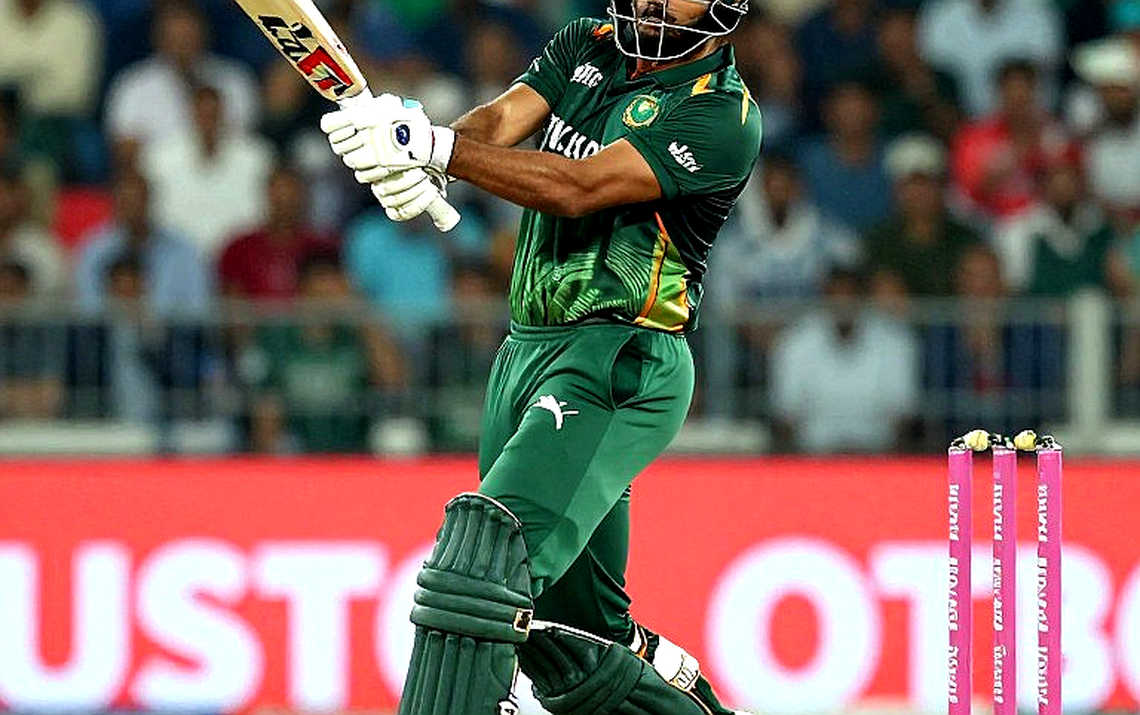
The question is not whether Pant is fit. The question is what the result on November 9 will actually mean. The CoE's email has already reached the selection committee — which means this is no longer merely a team-management matter. Head coach Gautam Gambhir has publicly said he has no update. That silence is itself a signal. And Pant himself, through the Delhi and District Cricket Association (DDCA), has conveyed that he expects to travel to New Zealand, and that if he does not, he will play the entire Syed Mushtaq Ali Trophy.
This is not just a fitness story. It is a picture of the system: medical clearance is quietly becoming a selection veto, a single institution is deciding the fate of three different squads in the same week, and the domestic tournament functions simultaneously as a recovery channel and as the other side of a calendar collision.

November 9: What Actually Happens
Pant's test is a match simulation — a full-intensity practice game involving wicketkeeping, running, diving and prolonged squatting. The protocol is correct. A side strain is an injury that resurfaces under explosive movement: sprinting between the wickets, diving, and repeated squatting while keeping. Scans and lab reports cannot establish whether a player will hold up under match pressure. Simulation is therefore an appropriate gate.
But there is a technical distinction that must not be ignored. Passing a simulation and being ready for a Test-match workload are two different claims. Keeping for five days, batting twice, and squatting to every ball is several times the load of any simulation. The November 9 result will tell us whether Pant is selectable. It will not tell us whether he is fully rehabilitated. The gap between those two is the real risk.
Second, the time frame. A test on November 9 and the first Test in New Zealand on November 19 leave only ten days. In that window Pant must travel, manage jet lag, train in unfamiliar conditions, and — if anything is borderline — complete a second simulation, for which there is simply no room. A borderline result on November 9 therefore becomes binary: play undercooked, or skip the series. There is no middle path in this calendar.
This is where Indian cricket's scheduling apparatus shows its weakness. A better system would place the simulation far enough from the tour to allow a re-assessment. That has not happened. And when there is no second chance, pressure builds on the medical team to tilt a borderline call towards a pass — because the alternative is so harsh.

Side Strain: The Most Deceptive Injury for a Keeper
A side strain is an injury to the oblique and abdominal muscle group, caused by twisting, turning and lateral movement. It is inconvenient for a batter, serious for a fast bowler, and most serious for a wicketkeeper. The reason is straightforward: keeping involves repeated asymmetrical movement. Holding a low crouch, rising suddenly to one side, throwing the body weight laterally into a dive — all of it loads the same muscle group.
Medically, the defining feature of a side strain is recurrence. And the risk of recurrence peaks precisely when a player feels recovered and returns to full intensity. That is why the correct return protocol is staged, not an immediate jump to full workload.
In this entire analysis, the biggest information gap is that no report states the severity of the strain, the recovery timeline, or the parameters set for the simulation. The readiness assessment therefore rests entirely on a test nobody has publicly observed. For a player of this importance, that is a very thin evidence base.
Pant's Record: Why This Matters So Much
Pant averages roughly 44 in Test cricket. For a wicketkeeper-batter, that is a world-class figure; the general benchmark sits around 35 to 40. But the average does not tell the whole story. Pant's real value lies in the innings he has played abroad — England 2026, Australia 2026-21, South Africa 2026. Those are the innings in which the team was under pressure, the pitch favoured the hosts, and he counter-attacked to change the course of a match.
That is why his absence is not a marginal loss. It is the emptying of a role for which India has no direct replacement. A keeper who bats at five or six and can turn a match with aggression in foreign conditions is a rarity.
A BCCI source has acknowledged that the team needs a player of Pant's stature. That sentence is not only praise; it is a signal of pressure. When voices inside the institution say the team needs him, a psychological push builds on the medical team to be lenient with a borderline result.
One more point matters. Pant is in the age band normally considered a batter's peak. The performance risk therefore comes from injury, not decline. That is good news — but it also shows how expensive a rushed return could be, because six or seven years of career are at stake.
New Zealand, November and Green Tops: The Host's Biggest Weapon
In this whole affair the least discussed and most important factor is conditions. November is early season in New Zealand. Green pitches, moisture, swing in the air and seam movement create ideal conditions for the home seamers.
Now place a returning side-strain patient in that environment. A batter returning from that injury is tested most on balance and rotation. When the ball is moving in and out off the seam, the batter must rotate the torso quickly. That is exactly the movement the injury punishes.
The second layer is workload. If Pant keeps for five days and bats twice, his body absorbs far more than the November 9 simulation. If the weather is poor, the match drags, or the team is asked to follow on, the load rises further.
Historically, Asian batters have found early-season New Zealand difficult. That is not new. What is new is that this time the batter going there is returning from injury.
The Selectors' Real Dilemma
The question needs reframing. It is not whether Pant is fit. It is what options actually sit before the selection committee.
Option one: play a returning wicketkeeper in a Test series in the conditions least suited to his injury. Option two: let him build match fitness in the domestic T20 tournament and go to New Zealand with a weaker balance. Neither is comfortable. If Pant plays and re-injures himself in the first Test, the damage is doubled — to the series and to the player. If he does not play and India lose, the question will be why a fit player was left out. Criticism is guaranteed either way.
The World Test Championship context sharpens this. India has consistently been in the top two of the table, and away tours are treated as the real test. Every Test point matters. This is not only a fitness question; it is also a points-table calculation.
A significant signal is that the CoE email went to the selection committee, not only to team management. That confirms this is a selection matter, not merely a medical one. If it were purely fitness, the conversation would stay between physio and trainer. Inclusion of the selection committee shows the final call is a balance of performance and risk.
Gambhir's Statement and the CoE's Silence
Gambhir saying he has no update looks ordinary at first. Coaches do not always disclose everything. But the timeline matters. The CoE email went out on Saturday; on Monday the coach faced the question and said there was no update.
There are only two readings. Either the coach was not briefed, or he chose not to disclose. Both represent a communication gap — and communication gaps invite speculation.
The stance may also be strategic. If he sets a deadline and Pant is not fit by then, the pressure lands on him. Silence preserves room to manoeuvre. That is understandable, but it has a cost: it leaves space for fans and media to fill.
An institutional shift also needs to be understood. The NCA has given way to the CoE. This is not a rebrand. It reflects a move towards professional load management and fitness clearance in Indian cricket. Clearance is now a formal process with inspectable documentation. That is a strength. But it also means the CoE's medical judgment operates as a de facto veto — the selection committee may hold formal authority, but the medical opinion controls the outcome.
The CoE: One Window, Three Players
The least noticed signal in this affair is that the CoE is handling three players at once: Pant, Prasidh Krishna and Harshit Rana. Their rehabilitation and clearance all flow through the same institution.
Rana's case is the clearest example. His clearance date is reported as November 11 or 12, and on November 20 he is due in Doha for India A at the Rising Stars Asia Cup. That means three decisions for three different squads in the same week — the Test side, the A side and the domestic tournament.
This is structural pressure. When a single institution holds several critical decisions at once, the risk is that one gets rushed or another gets delayed. Both outcomes hurt players.
The technical fix is straightforward: stagger clearance dates and report exceptions transparently. But there is a political dimension too. If one player is cleared early and another late, questions arise. The institution therefore needs clear standards and documented reasoning for every call.
Syed Mushtaq Ali: Safety Net or Consolation Prize
Pant's message through the DDCA has two parts. First, he expects to travel to New Zealand. Second, if that does not happen, he will play the entire Syed Mushtaq Ali Trophy.
The first part is carefully worded. He did not say he will go; he said he expects to. That distinction matters. It shows the player understands the decision is not his.
The second part is more significant. Committing to a full domestic tournament signals confidence in his recovery. It is also a strategic move: if he is not selected, his presence in domestic cricket will demonstrate that his omission was not a fitness verdict.
But the framing needs to change. Domestic cricket is usually treated as a punishment — as if being out of the Test side is a demotion. From a risk-management view that is wrong. If Pant misses New Zealand, playing the SMAT and then the Vijay Hazare Trophy is a controlled, staged return: T20 first, then 50-over, then the longest format. That is exactly the progression sports medicine recommends.
Seen this way, India's domestic structure is functioning as a recovery channel. That is a strength, not a weakness. The problem is only that the channel is simultaneously creating a calendar collision.
The Calendar Collision
There is simple arithmetic here. The Syed Mushtaq Ali Trophy starts on November 14. The first Test in New Zealand starts on November 19. If Pant is to travel, he cannot play the opening domestic matches. If he plays them, he cannot travel.
This is a binary choice imposed by the calendar, with no role for the player's preference. That is why the November 9 result becomes decisive. A yes closes the domestic route. A no closes the New Zealand route. There is no bridge between them.
This is a scheduling failure and should be described as one. For a player returning from injury, the ideal arrangement would keep the domestic route open for gradual rhythm while preserving a later path back into the Test side. Here the two paths collide at the same moment.
Three Scenarios
Worst case: Pant passes the simulation, travels, and the injury resurfaces in the first Test. The second Test is gone, the start of the domestic season is gone, and confidence takes a long-term hit. This is the most expensive outcome for both team and player.
Base case: Pant is cleared, travels, plays at least one Test, and the domestic fallback quietly disappears. This looks the most probable, because institutional pressure points that way.
Optimistic case: Pant is cleared, plays both Tests, scores in the middle order, and the injury is fully behind him. Possible, but not a safe assumption.
There is a fourth scenario that gets less attention. Pant is cleared but is used only as a batter in the first Test, with keeping handed to someone else. That is a common workload-management approach and the team management may well take it. It keeps Pant in the XI while reducing risk.
The Risk Ledger
First and largest sporting risk: recurrence of the side strain under Test conditions. Medium likelihood, high impact.
Second: New Zealand's seam attack exposing a returning batter's footwork and balance. Medium likelihood, medium impact.
Third: losing a proven match-winner from the middle order. That is the most direct cost to the team.
Fourth: a backup wicketkeeper-batter producing less at Test level. If Pant is out, this is near certain.
Fifth: multiple players depending on the CoE at the same time. Pant, Krishna and Rana are all passing through a single institutional bottleneck.
Sixth: public and media pressure. This is the most underrated factor, but it is real. When fans want Pant to play, every party feels a push to decide quickly.
Seventh: schedule density — SMAT, the New Zealand Tests and the Rising Stars Asia Cup all overlapping.
Taken together, the overall risk should be rated medium-to-high. The reason is singular: a ten-day recovery-to-Test window for a high-value returning wicketkeeper-batter, against the injury type most prone to recurrence.
The Real Risk Is Not the Test
The real risk is not the November 9 test. It is the load Pant will carry if he passes it.
Passing means he is fit enough to be selected within a deadline. It does not mean his rehabilitation is complete. The gap between those two is the operating risk.
If the team management is sensible, it will use him initially as a batter only and give the gloves to someone else. Committing to five days of keeping without a staged return would be unwise.
The Domestic Route Is a Shield, Not a Punishment
What reporting presents as a downside is, from a risk perspective, the safest option. If Pant misses New Zealand and plays the SMAT and then the Vijay Hazare Trophy, his workload escalates gradually. That is the standard approach in sports medicine.
The problem is that this route is treated as a punishment when it should be treated as an opportunity. If a player is being given a chance to return without risk, that is a system working well.
Broadcast and Audience
The broadcast value of the India-New Zealand Test series depends considerably on who is playing. Pant's presence or absence affects audience pull. That effect is smaller than for a home series, but it is not negligible.
On the other side, if Pant stays back for the domestic tournament, the domestic broadcaster may gain slightly. That is a narrow but real effect.
Third and most important: the CoE has become a structural node through which three different squads flow, and its clearance timing shapes all three. That signal is the most underrated in the entire reporting.
The Governance Angle
There is no rules controversy here. No DRS issue, no code-of-conduct question, no hint of betting or fixing. Nothing unusual for the integrity unit.
The live issue is eligibility and selection. The gap between the CoE's fitness clearance and the coach's public statement is a minor communication flaw, not a major breach. Teams do not always instruct coaches to disclose everything publicly.
But one thing can be said: what is genuinely shifting is the balance of institutional power. Selection used to be final. Now medical clearance is effectively decisive. This is happening across high-performance sport worldwide, so it is not unique to India. But it must be acknowledged, because accountability questions follow from it.
Fan and Media Mood
The mood is accelerating. The centre of discussion is whether Pant will play. But one thing gets lost: if he does play, will he immediately be back to his old level?
Public expectation usually equates fit with instantly productive. That expectation runs well ahead of reality. A returning keeper-batter facing seam and swing in New Zealand is unlikely to be at full level in the first week. That is not criticism; it is physiology.
Pant's message arriving via the DDCA is an unusual channel. Players usually speak through the BCCI or team management. Here the route went through Rohan Jaitley. The timing also looks deliberate — two days before the test. The purpose is to keep both possibilities open. If clearance comes, the story continues. If it does not, the alternative is already on record.
What to Watch After November 9
Signal one: a public confirmation of clearance. An official statement from the team or the CoE will immediately clarify direction.
Signal two: any change in Gambhir's language. If he starts setting a timeline, internal pressure is rising.
Signal three: team sheets around November 14. If Pant's name appears in the SMAT list, the fallback is live.
Signal four: Harshit Rana's clearance. If he is cleared by November 11-12, does it affect the pace rotation for New Zealand? That is a squad composition question.
Signal five: any travel deadline set by the selection committee. That would formalise the timeline.
A Note on Terminology
Match simulation means a full-intensity practice match used to certify fitness, not a formal competition. It is the entry gate to clearance.
A side strain is an injury to the oblique and abdominal muscles caused by explosive twisting or lateral movement. Recurrence risk is highest among wicketkeepers.
The CoE — Centre of Excellence — is the BCCI's national high-performance centre that replaced or absorbed the old NCA role, handling rehabilitation and fitness clearance.
Wicketkeeper-batter is a specialist role combining elite glovework with reliable middle-order batting. That is why Pant's absence causes more structural damage than the absence of a pure batter would.
In Closing
This is as much a story about a system as about a player. Pant's fitness is an individual story, but the structure built around it reveals how Indian cricket operates.
The likelier outcome is that Pant is cleared, travels and plays. But the real sporting risk is that clearance does not equal readiness for a Test workload. That gap cannot be erased; it can only be managed.
And the most important part of this decision is not November 9. It is November 10 — the day it will be decided how the team uses him after clearance. Handled well, both Pant and the series are protected. Handled in haste, both are at risk.
(This report is based on publicly available information and the Stage-1 text analysis. It is provided for sports-information reference only and does not constitute betting advice. Sporting outcomes are highly uncertain; please treat the analytical conclusions rationally.)